
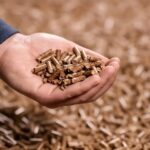




Wood-processing industries generate enormous quantities of residues every day. Sawmills, furniture manufacturers, woodworking workshops, flooring factories, and timber-processing plants all produce sawdust, wood shavings, chips, and other biomass waste. Traditionally, these materials may have been burned directly, discarded, stored in large piles, or transported away for disposal. However, modern biomass processing technology provides a more valuable solution: converting wood waste into densified fuel pellets.
Sawdust pelletizing is an efficient way to transform loose and difficult-to-handle wood residues into a standardized biomass fuel. Through controlled grinding, drying, compression, cooling, screening, and packaging, low-density sawdust can become a dense, uniform, and easy-to-transport pellet.
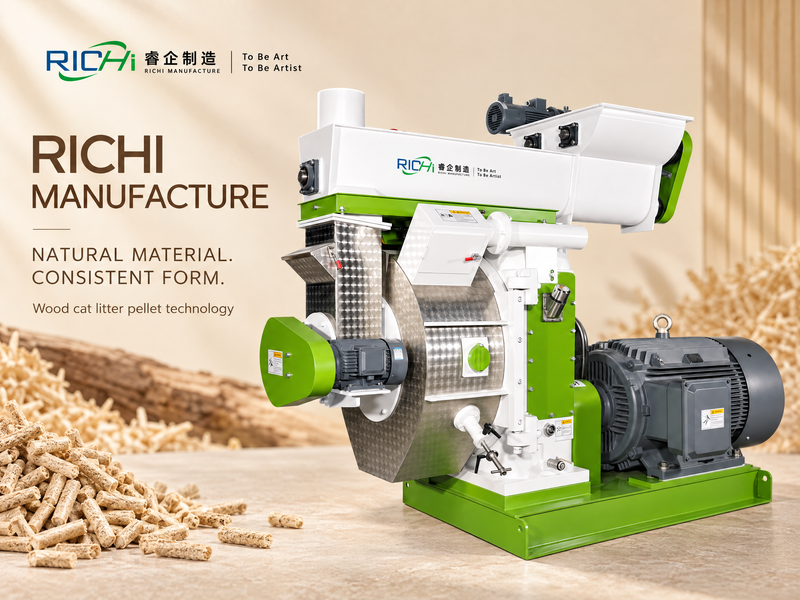
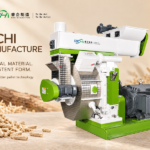
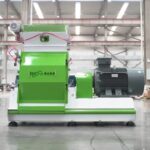
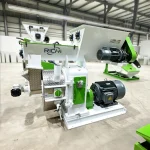
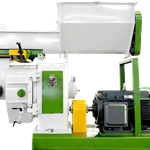
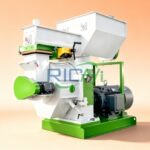
At the center of this process is the pellet mill for sawdust, which compresses prepared wood particles through a die to form cylindrical pellets. When combined with suitable auxiliary equipment, the pellet mill can become part of a complete wood waste recycling system.
But why is sawdust pelletizing considered such an effective solution for wood waste? The answer involves resource utilization, energy density, transportation, storage, environmental benefits, production efficiency, and commercial value.
This article explores the major reasons why sawdust pelletizing is ideal for wood waste and explains how manufacturers can turn wood residues into valuable biomass fuel.
1. What Is Sawdust Pelletizing?
Sawdust pelletizing is the process of converting loose sawdust into compact cylindrical pellets through mechanical compression.
The basic production process is:
Wood Waste → Cleaning → Crushing/Grinding → Drying → Pelletizing → Cooling → Screening → Packaging
During pelletizing, prepared sawdust enters a pellet mill. Pressure rollers compress the material against a die. The pressure forces the wood particles through small holes in the die, creating continuous cylindrical strands. These strands are cut into pellets of the required length.
The resulting pellets are much denser and easier to handle than loose sawdust.
2. Wood Waste Is a Valuable Resource
One of the biggest reasons for pelletizing sawdust is that wood waste is not necessarily waste in the economic sense.
Sawdust contains:
- Carbon
- Cellulose
- Hemicellulose
- Lignin
- Stored chemical energy
Instead of allowing these materials to accumulate, manufacturers can recover their energy value through pellet production.
For sawmills and woodworking businesses, pelletizing can therefore turn an unavoidable by-product into a marketable product.
This creates a circular approach:
Wood Processing → Sawdust Generation → Pellet Production → Biomass Fuel → Energy
Rather than treating sawdust as a disposal problem, businesses can treat it as a secondary raw material.
3. High Availability of Sawdust
Sawdust is widely available wherever wood is processed.
Common sources include:
- Sawmills
- Furniture factories
- Cabinet manufacturers
- Flooring factories
- Woodworking plants
- Timber-processing companies
- Wood product factories
For companies located near these facilities, sawdust can be available continuously throughout the year.
A stable raw material supply is one of the most important requirements for a successful pellet production project.
4. Pelletizing Increases Bulk Density
Loose sawdust has a very low bulk density.
This creates several problems:
- Large storage volume
- Difficult transportation
- Material loss
- Dust generation
- Poor handling characteristics
Pelletizing compresses sawdust into a much denser form.
This means more biomass can be stored and transported in a smaller volume.
Higher bulk density is particularly valuable for commercial biomass fuel businesses because transportation costs can represent a significant portion of total operating expenses.
5. Pellets Are Easier to Transport
Loose sawdust can be difficult to transport efficiently.
It takes up considerable space and can create dust during loading and unloading.
Pellets solve many of these problems.
Their uniform shape allows them to be transported using:
- Belt conveyors
- Screw conveyors
- Bucket elevators
- Trucks
- Bulk loading systems
- Automatic packaging equipment
Pellets can also be loaded into bags or bulk containers more efficiently than loose sawdust.
6. Better Storage Efficiency
Storage is another major advantage.
Loose sawdust requires large storage areas.
Pellets occupy less volume per unit of useful energy and can be stored in:
- Warehouses
- Silos
- Storage bins
- Bags
- Bulk storage systems
Proper storage is still important because wood pellets can absorb moisture.
A dry and well-ventilated storage environment helps preserve pellet quality.
7. More Uniform Fuel
Raw sawdust varies in particle size and moisture.
This can make direct combustion less consistent.
Pellets provide a more standardized fuel form.
A properly controlled pellet production process can produce pellets with relatively consistent:
- Diameter
- Length
- Density
- Moisture
- Energy content
This uniformity makes pellets easier to use in automated biomass heating systems.
8. Suitable for Automated Feeding
Loose wood waste is not always suitable for automated fuel-feeding equipment.
Its irregular shape and low density can cause:
- Bridging
- Uneven feeding
- Dust
- Blockages
Pellets flow more consistently through:
- Feed hoppers
- Augers
- Automatic feeders
- Fuel storage systems
This makes pelletized wood waste particularly suitable for modern biomass heating systems.
9. Natural Binding Properties of Wood
Wood contains lignin, which is important during pelletizing.
Under mechanical pressure and heat, lignin can soften and help bind wood particles together.
This means clean sawdust can often be pelletized without requiring large amounts of external binders.
The natural binding characteristics of wood contribute to:
- Pellet strength
- Durability
- Density
- Stability
However, the exact pelletizing behavior depends on the wood species, moisture, particle size, and equipment.
10. Reduced Waste Disposal Costs
Woodworking companies may otherwise need to spend money handling and disposing of sawdust.
Potential costs include:
- Transportation
- Storage
- Waste handling
- Disposal
- Cleaning
- Labor
Pelletizing can reduce the amount of loose waste that requires disposal.
Instead, the material becomes a useful product.
This can improve the overall economics of wood-processing operations.
11. Additional Revenue Opportunities
Sawdust pellet production can create a new revenue stream.
Wood-processing businesses can use their own sawdust to produce pellets and:
- Sell them as biomass fuel
- Use them in their own boilers
- Supply local heating facilities
- Sell to industrial customers
- Supply biomass energy businesses
The economic value depends on raw material availability, production costs, local fuel prices, and market demand.
12. Pelletizing Can Reduce Material Losses
Loose sawdust can be lost through:
- Wind
- Dust
- Handling
- Transportation
- Storage
Pelletizing reduces these losses by creating a stable and dense product.
Proper screening can also recover fines and return suitable material to the pelletizing process.
This improves raw material utilization.
13. The Role of the Pellet Mill for Sawdust
The pellet mill for sawdust is the core machine in the production process.
Its primary function is to compress prepared sawdust into pellets.
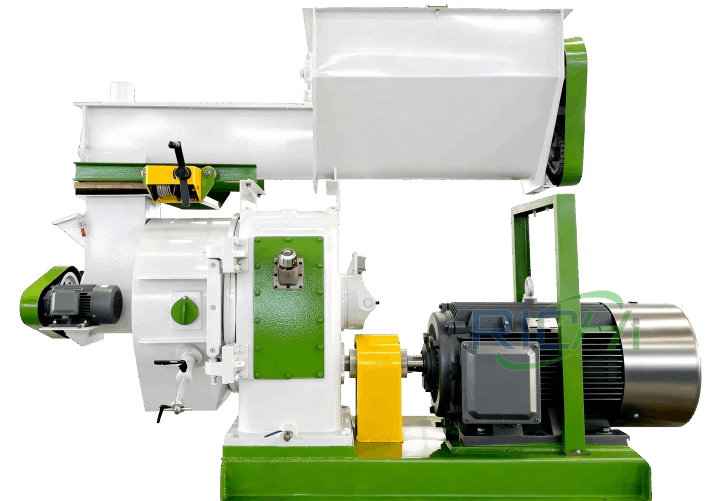
A typical ring-die pellet mill includes:
- Feeding system
- Pelletizing chamber
- Ring die
- Pressure rollers
- Drive system
- Lubrication system
- Cutter
- Discharge system
The sawdust is fed into the pelletizing chamber, where rollers compress it against the die.
The material is forced through the die holes and emerges as cylindrical strands.
A cutter then cuts these strands into individual pellets.
https://pelletisingmachine.com/sawdust-pellet-machine
14. Why the Pellet Mill Is So Important
The pellet mill determines several key characteristics of the finished product.
These include:
- Pellet diameter
- Density
- Durability
- Production capacity
- Energy consumption
The performance of the pellet mill depends on:
- Raw material moisture
- Particle size
- Wood species
- Die compression
- Roller condition
- Feed rate
Therefore, pelletizing equipment must be selected according to actual feedstock conditions.
15. Moisture Control Is Essential
Although pelletizing offers many advantages, sawdust cannot simply be fed directly into the pellet mill under all conditions.
Moisture must be controlled.
If sawdust is too wet:
- Pellets may be soft
- Production may become unstable
- Drying costs increase
- Material may stick
If it is too dry:
- Pellet formation may become difficult
- Durability may decrease
- Fines may increase
For many wood pellet processes, moisture is controlled around the mid-teens, but the ideal operating level depends on the raw material and pellet mill.
16. Drying Wet Wood Waste
Wood waste from different processing operations may have different moisture levels.
If moisture is too high, a drying system may be required.
A commercial dryer can reduce moisture before pelletizing.
A typical drying system may include:
- Rotary dryer
- Hot-air furnace
- Cyclone
- Exhaust fan
- Dust collection equipment
Efficient drying is important because thermal energy can represent a significant operating cost.
17. Particle Size Matters
Wood waste can include sawdust, shavings, and small chips.
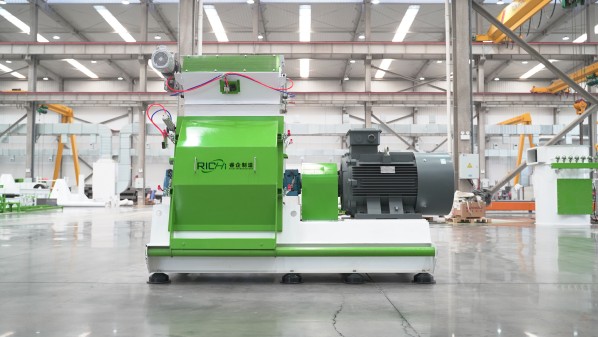
Larger particles may need to be reduced using a crusher or hammer mill.
A suitable particle-size distribution helps improve:
- Compression
- Pellet density
- Pellet durability
- Production stability
However, grinding should not be excessive.
Grinding material more finely than necessary increases electricity consumption and can create additional dust.
18. Different Wood Waste Can Be Processed
Depending on equipment and product requirements, pellet plants can process various clean wood residues.
Examples include:
- Sawdust
- Wood shavings
- Fine wood chips
- Planer shavings
- Certain agricultural-wood residues
However, the processing requirements may differ.
For example, large wood chips require more size reduction than fine sawdust.
19. Reduced Dust During Handling
Loose sawdust can create significant dust during transportation and storage.
Pelletizing reduces the amount of loose fine material.
Screening can further remove fines from the finished product.
A dust collection system should still be installed around:
- Crushers
- Hammer mills
- Conveyors
- Screens
- Pellet mills
- Packaging equipment
Because fine wood dust is combustible, proper dust management and fire-safety measures are important.
20. More Convenient Packaging
Pellets can be packaged in standardized units.
Common packaging formats include:
- Small bags
- Commercial bags
- Big bags
- Bulk transportation
Standardized packaging makes the product easier to sell through different distribution channels.
It also provides better protection against moisture and contamination.
21. Suitable for Industrial Heating
Wood pellets can be used as fuel in many biomass heating applications.
Potential applications include:
- Industrial boilers
- Commercial heating
- Agricultural heating
- Residential heating
- Biomass energy systems
The exact suitability depends on pellet quality and the requirements of the combustion equipment.
22. Suitable for Combined Heat and Power Applications
In larger biomass energy projects, wood pellets can be used as a standardized fuel for energy-generation systems.
Their uniform size and density can simplify fuel handling.
Compared with loose wood residues, pellets can provide more predictable feeding and storage characteristics.
23. Better Transportation Economics
Transportation costs depend heavily on the volume and density of the material.
Loose sawdust contains a lot of air between particles.
Pelletizing reduces this empty space.
As a result, more usable biomass can be transported in a given truck or container.
This can make longer-distance transportation more practical.
24. Pellet Quality Depends on the Entire Process
A pellet mill alone cannot guarantee high-quality pellets.
The complete process must be controlled.
The basic workflow is:
Wood Waste → Cleaning → Grinding → Drying → Pelletizing → Cooling → Screening → Packaging
Each stage affects the next.
For example:
Poor Drying → Incorrect Moisture → Weak Pellets
Similarly:
Poor Grinding → Uneven Particle Size → Poor Compression
And:
Poor Cooling → More Breakage → Higher Fines
25. Cooling Improves Pellet Stability
Fresh pellets leave the pellet mill at an elevated temperature.
They need to be cooled before packaging.
A counterflow cooler can:
- Reduce temperature
- Stabilize pellet structure
- Improve durability
- Prepare pellets for storage
Cooling is therefore an important part of the pelletizing process.
26. Screening Improves Final Product Quality
After cooling, pellets are screened.
The screening system removes:
- Fines
- Broken pellets
- Oversized material
This produces a more uniform final product.
Suitable fines can often be recycled to the pellet mill.
This improves overall material utilization.
27. Pelletizing Supports a Circular Economy
One of the strongest arguments for sawdust pelletizing is its contribution to resource efficiency.
Instead of:
Wood → Product + Waste
the process becomes:
Wood → Product + Sawdust → Pellets → Energy
This allows the same wood-processing system to create additional value from residues.
28. Environmental Advantages
Sawdust pelletizing can provide several environmental benefits when managed appropriately.
These include:
- Better utilization of wood residues
- Reduced waste disposal
- Lower loose-waste volume
- Increased use of biomass energy
- Improved transportation efficiency
The environmental performance of the final fuel depends on factors such as feedstock source, energy used in drying, transportation distance, and combustion technology.
29. Pelletizing Can Reduce Open Burning
In some regions, wood residues may be burned in uncontrolled or inefficient ways.
Pelletizing provides an alternative pathway.
Instead of burning loose sawdust directly, it can be converted into a standardized fuel for controlled combustion systems.
This can improve fuel handling and combustion management.
30. Economic Factors to Consider
Before investing in a pellet plant, manufacturers should analyze:
Raw Material Supply
How much sawdust is available?
Moisture
How much drying is required?
Electricity
What is the local electricity price?
Heat Source
What fuel or waste heat is available for drying?
Equipment
What pellet mill capacity is required?
Labor
How many operators are needed?
Market
Who will purchase the pellets?
Transportation
How far must raw material and finished products travel?
These factors determine project profitability.
31. Small-Scale Sawdust Pellet Production
Small producers can build relatively simple systems.
A basic process may be:
Sawdust → Grinding → Pelletizing → Cooling → Screening → Packaging
If the raw material is already clean, fine, and dry, fewer preprocessing machines may be required.
This can be suitable for:
- Small sawmills
- Furniture factories
- Farms
- Local biomass fuel businesses
32. Large-Scale Sawdust Pellet Production
Large factories require more comprehensive systems.
A commercial production line may include:
- Raw material storage
- Cleaning
- Crushing
- Drying
- Fine grinding
- Pelletizing
- Cooling
- Screening
- Packaging
- Dust collection
- Automatic control
Multiple pellet mills can be installed when higher production capacity is required.
33. Automation Improves Production Stability
Automation can control:
- Raw material feeding
- Dryer operation
- Pellet mill load
- Cooling
- Screening
- Packaging
PLC control systems allow operators to monitor important parameters from a centralized control room.
This can reduce manual intervention and improve production consistency.
34. Maintenance Is Essential
Regular maintenance is necessary for reliable pellet production.
Important components include:
- Ring die
- Pressure rollers
- Bearings
- Main shaft
- Feeder
- Conveyor
- Lubrication system
Operators should monitor:
- Vibration
- Noise
- Motor current
- Bearing temperature
- Pellet quality
Preventive maintenance can reduce unexpected downtime.
35. How to Select a Pellet Mill for Sawdust
When choosing a pellet mill for sawdust, consider:
- Required production capacity
- Wood species
- Moisture content
- Particle size
- Pellet diameter
- Desired automation level
- Energy consumption
- Wear-part life
- Maintenance requirements
The machine should be tested or evaluated using actual raw materials whenever possible.
36. Why Equipment Matching Matters
A pellet mill can only operate efficiently when upstream and downstream equipment are properly matched.
For example:
Dryer Capacity → Grinding Capacity → Pellet Mill Capacity → Cooler Capacity → Screening Capacity
If the dryer is too small, the pellet mill may not receive enough prepared material.
If the cooler is too small, the pelletizing process may need to slow down.
A complete production line should therefore be designed as an integrated system.
37. RICHI Wood Waste Pelletizing Solutions
RICHI Machinery Manufacture provides customized wood waste pellet production solutions for sawmills, furniture manufacturers, woodworking companies, and biomass fuel businesses.
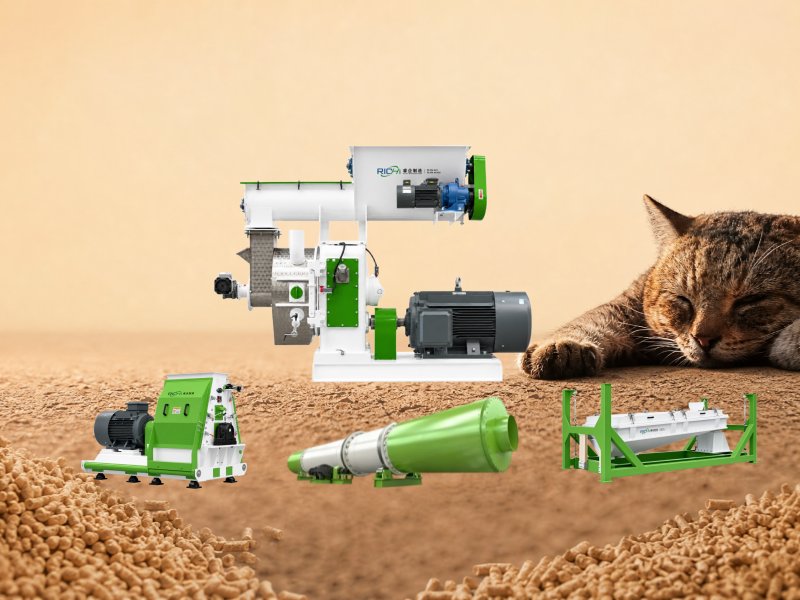
Depending on the raw material and production requirements, a complete system can include:
- Raw material storage
- Cleaning equipment
- Crushers
- Hammer mills
- Dryers
- Pellet mills for sawdust
- Coolers
- Screening machines
- Conveyors
- Packaging machines
- Dust collection systems
- Automatic control systems
The production line can be customized according to:
- Raw material type
- Moisture
- Production capacity
- Pellet diameter
- Factory layout
- Automation requirements
RICHI can also provide turnkey services covering production-line design, equipment manufacturing, overseas transportation and customs coordination, installation and commissioning, operator training, spare-parts support, and long-term technical assistance.
38. Common Challenges in Sawdust Pelletizing
Although pelletizing is highly useful, several challenges must be managed.
High Moisture
Requires additional drying energy.
Contaminated Sawdust
Can damage equipment and increase ash.
Inconsistent Particle Size
Can reduce pellet durability.
Worn Dies and Rollers
Can reduce output and increase fines.
Poor Storage
Can cause pellets to absorb moisture.
Inefficient Drying
Can increase production costs.
Proper process design can minimize these problems.
39. How to Maximize the Value of Wood Waste
A successful wood waste pellet business should focus on the complete value chain.
Step 1
Secure a stable source of clean wood waste.
Step 2
Measure moisture and particle size.
Step 3
Design suitable preprocessing.
Step 4
Choose an appropriately sized pellet mill.
Step 5
Optimize drying and pelletizing.
Step 6
Cool and screen the pellets.
Step 7
Package or transport the product efficiently.
Step 8
Develop stable fuel customers.
This approach can turn a low-value residue into a consistent commercial product.
40. Conclusion
Sawdust pelletizing is ideal for wood waste because it addresses many of the challenges associated with loose biomass residues. It transforms low-density sawdust into a dense, uniform, transportable, storable, and commercially valuable biomass fuel.
The major benefits include:
- Higher bulk density
- Easier transportation
- More efficient storage
- Better automated feeding
- Reduced waste disposal
- Improved resource utilization
- Additional revenue opportunities
- More standardized fuel quality
The pellet mill for sawdust is the core equipment that converts prepared wood residues into pellets, but the best results come from an integrated production system. Cleaning, grinding, drying, pelletizing, cooling, screening, packaging, and storage all influence the final product.
For small-scale operations, a simple pelletizing system may be sufficient when clean and dry sawdust is already available. For large commercial plants, a complete automated production line can provide better control over capacity, pellet quality, energy consumption, and labor requirements.
The key to successful sawdust pellet production is therefore not simply purchasing a pellet mill. It is matching the equipment and process to the actual characteristics of the wood waste.
With appropriate raw material preparation, moisture control, die selection, equipment maintenance, and process management, sawdust can be efficiently converted from an industrial residue into a valuable renewable fuel. For sawmills and woodworking businesses looking to reduce waste while creating additional value, sawdust pelletizing offers a practical and scalable solution.