





Selecting a pellet mill for industrial wood processing is not a matter of choosing the machine with the largest motor or the highest catalog output. A reliable selection starts with the raw material that will actually enter the plant, then works forward through moisture control, size reduction, storage, feeding, pelletizing, cooling, screening, and the required operating schedule. The pellet mill is the central forming machine, but its real performance depends on how consistently the rest of the line prepares material for it.
This is especially important for projects processing sawdust, wood chips, planer shavings, offcuts, mixed forestry residues, or combinations of hardwood and softwood. Two projects with the same target output can require different pellet mill arrangements because bulk density, fiber structure, moisture variation, contamination risk, and upstream preparation are different. Industrial buyers should therefore compare machines as part of a complete process rather than as isolated pieces of equipment.
Start With the Raw Material, Not the Pellet Mill Model
The first selection question is simple: what material will reach the pellet mill inlet after preparation? Sawdust may already be close to the required size, but it can still need screening, metal removal, moisture adjustment, or secondary grinding. Wood chips usually require a dedicated crushing stage before pelletizing. Planer shavings are light and bulky, so their conveying, storage, and feeding behavior can differ significantly from denser sawdust. Mixed biomass introduces another layer of variability because every component can change the friction, compressibility, moisture balance, and feeding stability of the blend.
For a stable raw-material source, a fully connected production flow can be efficient because each section receives a predictable material. For a plant that alternates between logs, chips, sawdust, wet residues, and dry residues, independent or bypassable process sections can be more practical. The objective is to avoid running unnecessary equipment while still ensuring that the pellet mill receives material within a controlled operating window.

Sawdust, Wood Chips, and Shavings Need Different Preparation
Sawdust is often the shortest route to pelletizing, but only when its particle distribution and moisture are already suitable. If sawdust contains oversized fibers, bark pieces, stones, metal, or inconsistent fractions, screening and grinding remain necessary. Fine material that is too dusty can also behave differently in storage and feeding, so the goal is not simply to make everything as fine as possible. The goal is a repeatable particle distribution that feeds smoothly and compacts consistently.
Wood chips require more size reduction. Depending on their dimensions and the original feedstock, the project may need primary chipping followed by hammer milling or another crushing stage. Planer shavings can be easier to reduce in size but harder to meter because of their low bulk density and springy structure. In these cases, bin design, anti-bridging measures, screw geometry, and feeder control may be as important as the rated power of the pellet mill itself.
For mixed raw materials, the preparation route should be designed around the most difficult fraction, while still allowing easier material to bypass unnecessary stages. This avoids turning a flexible plant into a high-energy system that runs every machine all the time regardless of what is being processed.
Moisture Is a Process Variable, Not a Fixed Number on a Brochure
Moisture has a direct effect on pressing resistance, pellet formation, die behavior, and final stability. For sawdust pelletizing, a commonly suitable pre-pelletizing moisture range is around 15–20%, but the final operating point should be confirmed against the actual wood species, particle structure, climate, storage conditions, and target pellet quality. Material that is too dry can become difficult to compact and may increase friction. Material that is too wet can reduce process stability and place additional load on downstream cooling and screening.
This is why a dryer should not be selected only by tons per hour. Its evaporation duty must reflect incoming moisture and the required moisture at the pellet mill. A project receiving freshly chipped wood will have a very different drying load from a furniture factory using relatively dry sawdust. If moisture varies by season, the drying and feeding systems need enough adjustment range to keep the pellet mill inlet condition stable.
Particle Size Determines Whether the Pellet Mill Works Smoothly
Particle size influences feeding density, contact with the rollers, die filling, energy demand, pellet surface quality, and the amount of fines returned after screening. Oversized wood fragments can interrupt the compression zone or create unstable loading. Excessively fine material can increase dust and alter how the material packs in the die. A good grinding system therefore aims for a controlled distribution rather than a single nominal number.
The grinding system must also be sized for the real raw material. A hammer mill processing dry sawdust does not face the same duty as a crusher handling fibrous shavings or denser hardwood chips. Buyers should ask for capacity assumptions for the crusher and pellet mill together, because an undersized grinding section can starve the pellet mill while an oversized pellet mill sits below its useful load.
Industrial Wood Pellet Mill Capacity Selection Guide
RICHI Machinery’s verified general range for sawdust, wood, and biomass production lines is 1–160 T/H, while the verified standalone biomass pellet mill range is 0.5–4 T/H. These are scope ranges, not a promise that every raw material will achieve the top output of a particular machine. Industrial capacity should be selected from the expected continuous output of the full process under the buyer’s actual material conditions.
| Project condition | Recommended selection logic | Why it matters |
|---|---|---|
| Stable sawdust, controlled moisture, modest industrial output | Use one appropriately sized pellet mill with sensible reserve capacity | Simpler operation and maintenance can be efficient when upstream conditions are stable |
| Variable sawdust or mixed hardwood and softwood | Choose a pellet mill and feeding system with more operating margin and adjustable process control | Material changes can alter pressing resistance and real output |
| Wood chips or shavings requiring substantial preparation | Size crushing, drying, buffering, and pelletizing as one system | The pellet mill cannot compensate for an upstream bottleneck |
| High total plant output | Evaluate multiple pellet mills in parallel rather than only increasing single-machine power | Parallel capacity improves flexibility, maintenance planning, and production continuity |
| Future expansion is likely | Reserve space, conveying capacity, electrical capacity, and control interfaces for additional pellet mills | Expansion is easier when the original line is designed for it |
Rated Capacity Is Not the Same as Real Capacity
A catalog capacity is meaningful only when the test conditions are understood. Real industrial output changes with wood species, bulk density, moisture, particle size, pellet diameter, die compression characteristics, feeding uniformity, equipment wear, ambient conditions, and the amount of time available for maintenance. A project processing clean softwood sawdust can behave very differently from one processing mixed hardwood chips with seasonal moisture swings.
For this reason, buyers should ask suppliers to state the assumed raw material condition behind any output figure. A useful proposal should explain what enters the pellet mill, what preparation stages are included, how stable feeding is maintained, and how the target output is distributed across one or more pellet mills. If the expected capacity depends on an unrealistically dry, uniform, or easy-to-pelletize material, the number is not a reliable basis for investment.
For buyers comparing options, wood pellet machine should be evaluated together with the crushing, drying, feeding, cooling, and screening design rather than as an isolated machine purchase.
Ring Die, Rollers, Main Motor, and Transmission Must Work as a System
The ring die is not simply a consumable with a hole diameter. Its diameter, effective compression path, material, manufacturing quality, and relationship with the roller assembly affect throughput, pellet density, wear, and operating stability. RICHI’s internal specification guidance for wood applications uses 42CrMo ring-die material, with hardness controlled for industrial duty. More important than quoting one generic compression ratio is matching the die to the wood type and the required finished pellet.
The roller system must maintain consistent pressure across the working surface. Roller-shell condition, adjustment, bearing support, lubrication practice, and alignment all influence whether the die is loaded evenly. A larger main motor cannot correct poor roller contact or unstable feeding. It can only provide more available power to a mechanical system that still needs correct pressure, transmission, and material flow.
Transmission design matters because industrial pelletizing involves sustained torque and repeated load changes. Gearboxes, shafts, couplings, bearings, and the main drive should be evaluated for continuous duty, maintainability, and protection against abnormal loads. Buyers should ask how the drive transmits torque, how bearings are protected, how lubrication is handled, and what inspection points are accessible during routine maintenance.
Why Higher Plant Output Cannot Be Solved by Motor Power Alone
Increasing motor power does not automatically increase stable production. Pelletizing capacity is constrained by how much prepared material can be fed evenly, how efficiently the die area can process it, how heat and friction are managed, how the transmission handles torque, and how quickly pellets can be removed, cooled, screened, and stored. Once another part of the process becomes the bottleneck, additional motor power produces little practical benefit.
Very high plant capacities are therefore normally an integration problem rather than a single-machine problem. Multiple pellet mills in parallel can distribute load, allow one machine to stop for die or roller service while others remain available, and make production planning more flexible when different raw materials or pellet specifications are required. The correct number of machines depends on target output, expected utilization, maintenance strategy, and how much production loss the plant can tolerate during service.
Single Pellet Mill or Multiple Machines in Parallel?
A single pellet mill is attractive when the required output is comfortably within one machine’s realistic duty and when planned maintenance can be scheduled without disrupting customer deliveries. It simplifies conveying, electrical control, spare-parts inventory, and operator training. However, a single machine also creates a larger production interruption when the die, roller, bearing, feeder, or drive requires service.
Parallel pellet mills become more attractive as plant output, operating hours, and delivery obligations increase. They can provide redundancy, allow staged production during low-demand periods, and support future expansion. The trade-off is additional capital cost, more conveyors and controls, more spare parts, and greater coordination of feed distribution. The right choice is the one that gives the lowest practical cost per ton while meeting production availability requirements.
Raw Material and Pellet Mill Selection Decision Guide
- Identify the incoming material. If the plant receives logs or large offcuts, include chipping before fine crushing. If it receives chips, verify whether direct fine crushing is possible. If it receives sawdust or shavings, check actual particle distribution and feeding behavior before deciding which crushing stages can be bypassed.
- Measure moisture under real storage conditions. If moisture is consistently near the pelletizing target, use only the adjustment and buffering needed for stability. If moisture is high or seasonal, size the dryer for evaporation duty rather than nominal wet tons per hour.
- Check particle consistency. If oversized fibers or chips remain, improve grinding or screening before increasing pellet mill size.
- Define realistic continuous output. Base the target on sellable pellets per operating hour, including maintenance and normal recycle, not on a short-duration peak test.
- Choose the pellet mill arrangement. Use one machine when capacity, maintenance windows, and delivery risk permit. Use multiple units when output, redundancy, future expansion, or product flexibility justify parallel operation.
- Match downstream equipment. Confirm that cooling, screening, fines return, conveying, and packing can handle the combined pellet mill output without causing backpressure or storage congestion.
Complete Wood Pellet Line Matching Is Critical
A complete wood pellet line should be balanced around material flow. The chipper and crusher prepare the required particle structure. The dryer controls moisture. Buffer bins and feeders smooth short-term fluctuations. The pellet mill converts prepared material into pellets. The cooler reduces pellet temperature and stabilizes the product for handling. Screening removes fines and returns recoverable material where appropriate. Conveying and packing then move finished pellets without creating unnecessary breakage.
If any section is undersized, the pellet mill cannot deliver its useful capacity. A small dryer can restrict wet-season output. A poorly designed bin can bridge and starve the feeder. An undersized cooler can force the pellet mills to slow down. A weak screening and recycle arrangement can increase dust and reduce finished-product yield. Capacity verification must therefore be performed across the entire process, not only at the pelletizer nameplate.
Continuous Industrial Production Requires a Maintenance Strategy
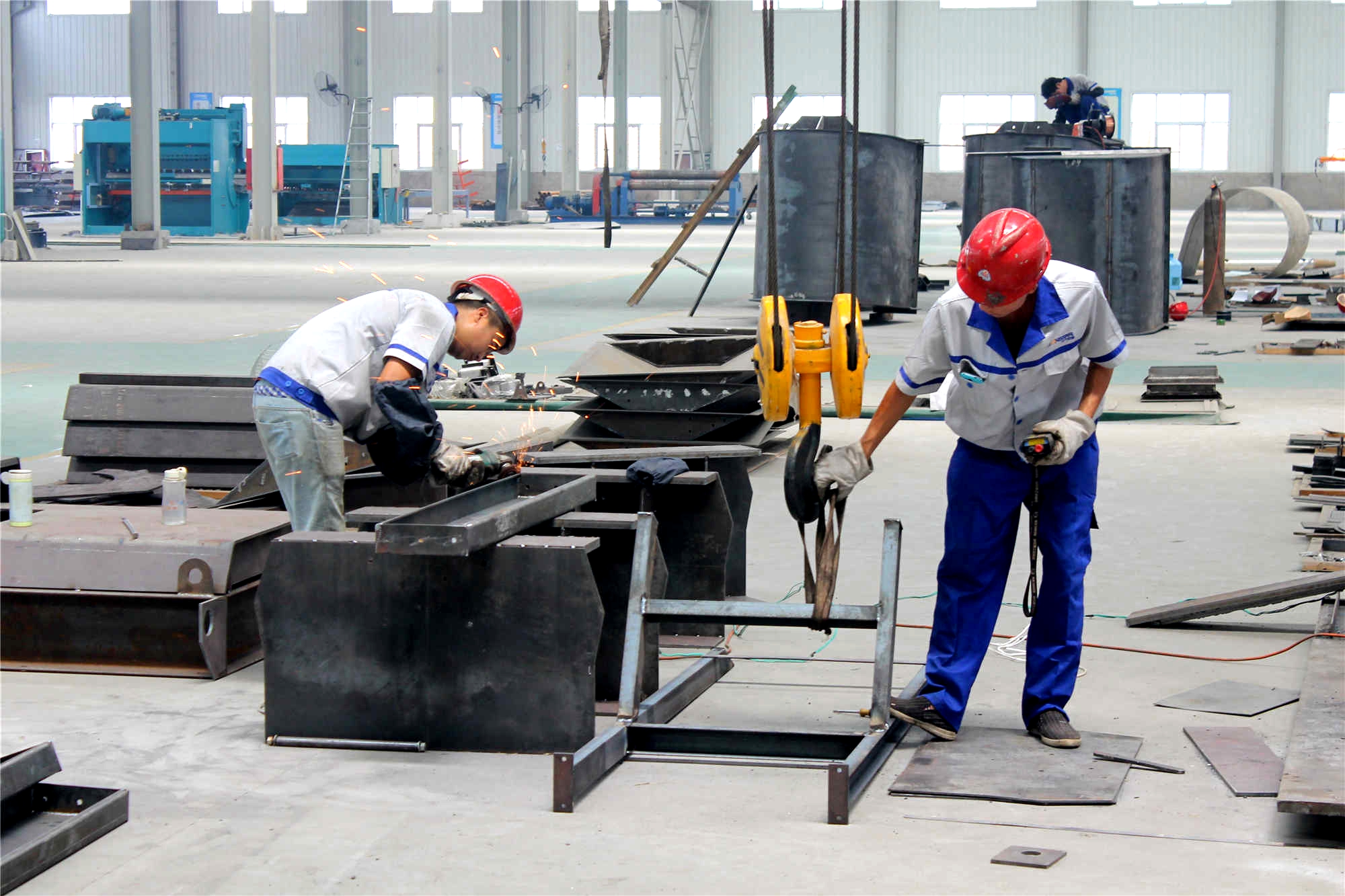
Industrial pellet plants should be designed around maintenance from the beginning. Ring dies, roller shells, bearings, seals, lubrication points, feeders, and drive components require routine inspection. Operators need clear daily, weekly, and periodic maintenance procedures, plus safe access around the machine. A plant that cannot stop long enough for preventive maintenance eventually pays for that decision through unplanned downtime.
Spare-parts planning is equally important. Critical wear parts should be identified before commissioning, and the stocking level should reflect operating hours, delivery lead time, number of pellet mills, and the consequence of a shutdown. Parallel pellet mills can reduce production risk, but only when spare parts and maintenance resources are organized to support them.
Compare Initial Purchase Cost With Long-Term Operating Cost
The lowest machine price is not necessarily the lowest project cost. Industrial buyers should compare the complete cost structure: upstream preparation, electrical demand, wear parts, labor, maintenance access, downtime risk, fines recycle, pellet breakage, spare-parts inventory, and the ability to process expected raw-material variation. A lower-cost pellet mill that requires frequent interruptions or cannot maintain output on the actual wood can become expensive very quickly.
At the same time, oversizing every component is not efficient. Oversized motors, dryers, conveyors, and multiple idle pellet mills increase capital cost and can reduce operating efficiency at low load. The goal is controlled reserve capacity: enough margin for material variation, wear, maintenance, and future demand without building a system that is permanently underutilized.
When Should You Choose a Larger Pellet Mill or More Units?
- Choose a larger model when the actual material has been verified, the upstream system can feed it continuously, and the realistic required output is close to the current machine’s continuous-duty limit.
- Choose multiple pellet mills when total plant capacity exceeds the practical output of one machine, when maintenance downtime must not stop the whole plant, or when staged expansion is part of the investment plan.
- Increase process reserve when raw material moisture, species, particle structure, or bulk density varies substantially.
- Upgrade the upstream system before upgrading the pellet mill when grinding, drying, storage, or feeding is the real bottleneck.
- Upgrade downstream cooling and screening when pellet discharge, temperature, or fines handling limits the usable output.
A Better Purchase Decision Starts With Real Material Data
Before final equipment selection, provide representative information on raw material type, dimensions, bulk density, moisture range, contamination, required pellet size, target hourly output, annual operating schedule, available electricity, workshop constraints, and future expansion plans. Where possible, representative raw-material samples or test data should be used to confirm the most critical assumptions.
RICHI Machinery approaches industrial wood pellet projects as integrated production systems rather than isolated pellet mills. That distinction matters because the machine can only perform consistently when the raw material is prepared correctly and every upstream and downstream section is matched to the same real production target. For an industrial buyer, the best pellet mill is therefore the one that fits the actual wood, the complete process, the required availability, and the long-term operating plan.