

Every dairy operation faces the same arithmetic. A mature cow produces roughly 15 to 20 kilograms of manure per day. A 200-head herd generates three to four tonnes daily, over a thousand tonnes annually. For years, the default answer was simple: spread it on nearby fields. But land access shrinks, neighbors complain about odor, and nutrient loading becomes a regulatory issue. The manure that once seemed like a free resource starts to look like a liability.
The shift happens when you stop treating manure as a disposal problem and start treating it as a product with specifications. That is where a cow manure fertilizer pellet machine enters the conversation. Not as a piece of equipment to admire in a catalog, but as a tool that changes what you can do with the material your farm already produces.
This article is about that decision. Not the machine alone, but the conditions, constraints, and trade-offs that determine whether pelletizing makes sense for a specific operation.
Why Raw Cow Manure Is Difficult to Use Well
Fresh cow manure has a moisture content that typically falls between 75% and 85%. At that level, it is heavy, biologically active, and difficult to handle with any precision. Spreading wet manure means moving a lot of water. Storage means managing leachate and odor. Application timing is dictated by field conditions rather than crop needs.
Composting helps. It reduces volume, stabilizes nutrients, and kills many pathogens and weed seeds if the pile reaches proper temperatures. But compost still has limitations. It is bulky. It is dusty when dry, muddy when wet. Application rates are hard to control because nutrient concentration varies from batch to batch. Transporting compost beyond a few kilometers rarely makes economic sense.
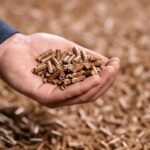
Pellets change those constraints. A well-formed pellet has a moisture content typically below 15%. It flows through spreaders and conveyors without bridging. Nutrient density is higher and more consistent. Storage is straightforward. And perhaps most importantly, pellets can travel. They can be bagged, sold, and shipped to customers who are willing to pay for a uniform organic fertilizer rather than accept whatever the farm happens to have.
That last point matters more than it first appears. The economic case for pelletizing is rarely about saving labor on the farm alone. It is about creating a product that has a market beyond the farm gate.
What the Machine Actually Does
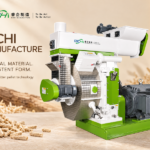
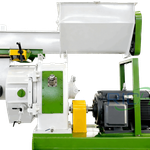
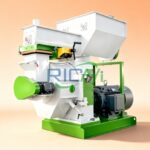
A cow manure fertilizer pellet machine does not simply squeeze wet manure into shapes. It compresses material that has already been dried or composted to a workable moisture range. The machine applies pressure through a die, forcing the material through openings that determine pellet diameter. A cutter trims the extruded material into uniform lengths.
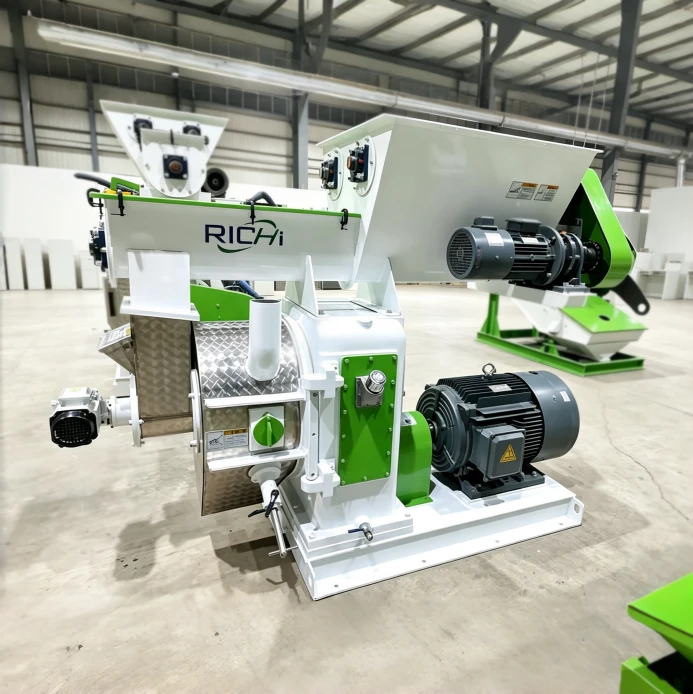
The process is mechanical, not chemical. It does not add nutrients or change the fundamental composition of the manure. What it changes is physical form: density, flowability, and handling characteristics. A pellet made from properly composted cow manure retains the organic matter and nutrient profile of the source material, but in a package that behaves predictably.
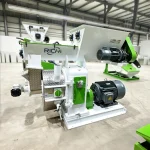
Two main machine architectures exist. Flat die pellet mills are common in smaller operations, particularly where capacity requirements are modest and budget is a primary constraint. Ring die pellet mills are used for larger capacities and continuous operation. The choice is not about which is “better” in absolute terms. It is about matching the machine to the material, the throughput, and the operating pattern of the farm or processing facility.
Capacity ranges for cow dung pellet machines span from around 1 tonne per hour to over 20 tonnes per hour, depending on model and configuration. That range matters because it forces a real decision. A machine sized for 10 tonnes per hour running at 2 tonnes per hour is inefficient. A machine sized for 2 tonnes per hour trying to meet a 5-tonne commitment will fail. The sizing question is not trivial.
The Pre-Pelletizing Steps That Determine Success
Most pelletizing problems do not originate in the pellet mill. They originate upstream.
Moisture Control
Cow manure arrives wet. Pelletizing requires a moisture content that is typically below 20%, and many machines perform best with material in the 12–18% range. That means drying or composting is not optional. It is part of the process.
Composting is often the preferred route because it achieves two things simultaneously: it reduces moisture through evaporation and biological activity, and it stabilizes the material. A properly managed compost pile will reach thermophilic temperatures that reduce pathogen loads and break down volatile compounds. The result is a material that is easier to dry and less prone to clogging the pellet die.
Mechanical drying can accelerate the process, but it adds capital and energy cost. For operations with limited budget, passive or forced-aeration composting may be sufficient. For high-throughput facilities, a rotary dryer integrated into the production line is common.
Particle Size and Consistency
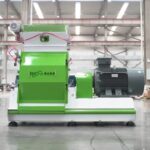
Cow manure compost that has not been screened or ground can contain fibrous material, stones, and uneven clumps. These cause inconsistent pellet formation, accelerated die wear, and frequent downtime. A hammer mill or similar grinding step before pelletizing is often necessary, even if the compost appears uniform to the eye.
The target is not a powder, but a material with a narrow particle size distribution. Large particles create weak points in the pellet. Fine particles can cause die blockage. The sweet spot depends on die design and pellet diameter, but in general, a consistent grind with minimal oversized material produces the most stable operation.
Binders and Additives
Cow manure compost often pellets well on its own, particularly if it contains some fibrous bedding material. But in some cases, a binder improves pellet durability and reduces fines. Common binders include clay minerals, starch, or biochar. Biochar addition has been studied as a way to improve pellet characteristics while also incorporating a carbon-rich material into the fertilizer product.
The decision to use a binder should be driven by pellet quality requirements and market expectations, not by a default assumption that it is always needed. Many cow manure pellet operations run without binders and achieve acceptable durability.
What Changes When You Pelletize: A Production Perspective
The operational changes are easier to see when you walk through a week of production rather than look at a machine specification sheet.
Storage. Loose compost occupies volume and can slump, crust, or generate leachate depending on moisture. Pellets can be stored in bulk bags, silos, or flat storage with minimal risk of caking if kept dry. Inventory becomes countable and manageable.
Transport. A tonne of pellets occupies less space than a tonne of loose compost because the material is denser and more uniform. More importantly, pellets can be handled with conventional grain augers and conveyors rather than front-end loaders and dump trucks. This reduces the labor and equipment required to move material from storage to a spreader or bagging line.
Application. Spreading pellets with a standard fertilizer spreader is possible because the material flows. Application rate can be set by volume or weight with reasonable accuracy. This matters for customers who are applying the product to high-value crops where over- or under-application has real cost consequences.
Market position. Pelleted organic fertilizer competes in a different market than bulk manure or compost. It can be sold in bags at garden centers, marketed to organic farms that need a consistent input, or used in landscaping and turf management where uniform appearance and predictable nutrient release are valued. The product is no longer “manure.” It is an organic fertilizer with specifications.
None of these changes are automatic. They depend on producing a pellet that meets basic quality standards: durability, uniform size, and moisture content low enough to prevent mold growth. A pellet that crumbles in the bag is worse than compost, because it combines the handling problems of powder with the cost of pelletizing.
Cost Structure: Where the Money Goes
Pelletizing is not free. The cost structure has several distinct components, and understanding them helps determine whether the economics work for a given operation.
Capital cost. A complete cow manure pellet production line—including fermentation equipment, grinder, mixer, pellet mill, dryer, cooler, screener, and packaging—can range from tens of thousands of dollars for a small line to several hundred thousand dollars for a high-capacity facility. A standalone pellet mill without upstream and downstream equipment is less expensive, but it will not produce a finished product without those supporting steps.
Energy cost. Pelletizing is energy-intensive. The pellet mill itself requires substantial power to compress material through the die. Drying, if mechanical, adds thermal energy. Cooling and conveying add electrical load. Energy cost per tonne of pellets varies with material moisture, pellet diameter, and machine efficiency. For operations considering on-site pelletizing, energy availability and price are often more important than machine purchase price.
Labor. A well-designed line can operate with a small crew, but it is not unattended. Material feeding, moisture monitoring, die changes, maintenance, and bagging all require attention. Labor cost depends on automation level and local wage rates.
Maintenance and wear parts. The die and rollers are consumable. Their life depends on material abrasiveness, moisture consistency, and operating practices. Cow manure compost with sand or grit content will wear dies faster than clean compost. Budgeting for die replacement is part of operating cost, not a surprise.
Feedstock cost. This is the tricky one. If the manure is already being handled as part of normal farm operations, the feedstock cost is essentially the cost of moving material to the pellet line. If manure must be purchased or transported from another site, the economics change significantly. Pelletizing low-value material into a higher-value product only works if the input material is available at low cost.
The break-even calculation is not universal. It depends on what the alternative disposal cost is, what price the pellet product can command, and what scale the operation can sustain. A farm that currently pays for manure hauling and spreading has a different starting point than a farm that spreads its own manure on its own land.
Matching Machine Scale to Farm Reality
One of the most common mistakes in planning a pellet operation is sizing for the maximum possible throughput rather than the realistic average. A dairy with 500 cows produces enough manure to theoretically support a large pellet line, but the actual material available for pelletizing depends on how much is already used for land application, how much bedding is mixed in, and how much time and labor the farm can dedicate to the process.
A more useful approach is to start with the material that is currently causing the most difficulty: the excess manure that cannot be applied to land at the right time, the pile that is creating odor complaints, or the volume that is being hauled away at cost. That material is the real feedstock for the pellet operation. If it is 2 tonnes per day, a 1–2 tonne per hour pellet mill running one shift may be sufficient. If it is 20 tonnes per day, a larger ring die system and a more automated line become necessary.
The temptation to buy a bigger machine “for future growth” is understandable but often counterproductive. A larger machine running well below capacity produces pellets at a higher cost per tonne because fixed costs—power, labor, maintenance—are spread over fewer tonnes. Starting with a scale that matches current material availability and adding capacity later, if the market develops, is usually a more sound approach.
For farmers who are evaluating equipment for the first time, cow manure pellet machine for organic fertilizer is a search phrase that reflects a real purchasing intent: not just curiosity about the technology, but a decision about whether to invest in a production asset. The machine is the center of that decision, but it is not the only factor.
Pellet Quality: What Buyers Actually Notice
When pellets are sold rather than used on-farm, quality becomes a commercial issue. The characteristics that matter most to buyers are straightforward:
Durability. Pellets that break during handling create dust and reduce the effective application rate. Durability is tested by tumbling a sample and measuring the percentage of intact pellets. A durable pellet survives bagging, transport, and spreading without excessive fines.
Uniformity. Pellet diameter and length should be consistent. A bag containing a mix of fines and oversized pellets looks unprofessional and complicates application calibration.
Moisture. Pellets that are too dry are brittle. Pellets that are too wet can mold in storage. The target moisture content for organic fertilizer pellets is typically in the range of 10–15%, though this varies with climate and storage conditions.
Appearance. Color and surface texture matter for retail markets. A uniform, smooth pellet commands a higher price than a dull, cracked one, even if the nutrient content is identical.
Nutrient content. For organic certification and fertilizer registration purposes, the nutrient profile—nitrogen, phosphorus, potassium, organic matter—must be documented. Pelletizing does not change the nutrient content of the source material, but it does require that the source material be consistent enough to produce a consistent product.
These quality parameters are not achieved by the pellet mill alone. They are the result of the entire process: feedstock consistency, moisture control, grinding, mixing, die selection, and operating discipline.
Where Pelletizing Fits—and Where It Does Not
Pelletizing cow manure makes sense under specific conditions. Large livestock operations with excess manure and limited land for spreading are natural candidates. Farms in regions with strict odor or nutrient runoff regulations may find that pelletizing creates a transportable product that can be sold or shipped out of sensitive areas. Operations that already have a composting step can add pelletizing as a value-added finishing process. And entrepreneurs who see an opportunity in the organic fertilizer market may build a pellet operation around manure sourced from multiple farms.
It makes less sense when manure volumes are small and land application is not a problem. The capital and operating costs of a pellet line are difficult to justify for a farm that can simply spread its manure at the right time and has enough land to absorb the nutrients. It also makes less sense when the manure is very wet and no affordable drying method is available. Drying is often the hidden cost that determines whether a pellet project is viable.
The decision is not about whether pelletizing is a good technology in general. It is about whether it fits a specific material flow, market situation, and cost structure. That is why a conversation with an equipment supplier who understands both the machine and the production context is more useful than a catalog comparison.
For buyers who want to understand the full range of equipment and project options—from small farm-scale units to complete industrial lines—it is worth spending time with a manufacturer who works across those scales. pellet machine manufacturers who serve multiple industries and material types tend to have a clearer view of what works in practice, not just on paper. If you want to know more about the company behind that support—its background, capabilities, and approach to project service—you can discover this info here.
The Maintenance Reality
A pellet mill is a mechanical device operating under high pressure and abrasive conditions. It requires maintenance. Dies wear. Rollers need adjustment. Bearings need lubrication. Ignoring maintenance does not make the problems disappear; it converts them into unplanned downtime at the worst possible moment.
The most important maintenance practices are also the simplest: keep the feedstock clean of stones and metal, monitor moisture consistently, check roller-to-die clearance regularly, and replace worn dies before pellet quality collapses. Many operators find that a daily inspection routine and a spare die on hand prevent the worst disruptions.
Maintenance cost is not a reason to avoid pelletizing. It is a cost of doing business, like any other processing operation. The question is whether the value added by pelletizing exceeds the total cost of production, including maintenance.
What to Do Before Buying
Before committing to a pellet machine, a prospective buyer should be able to answer a few concrete questions:
- What is the actual daily volume of manure available for pelletizing, not the theoretical maximum?
- What is the current cost of handling that manure—hauling, spreading, storage, regulatory compliance?
- What moisture reduction is achievable with existing or planned composting and drying capacity?
- What market exists for the pellets, and at what price?
- What level of automation is realistic given labor availability and technical support?
- Who will maintain the machine, and what spare parts are needed?
If those questions have clear answers, the machine selection becomes much more straightforward. If they do not, the project is not ready for equipment procurement.
A Closing Note on Decision-Making
Pelletizing cow manure is not a universal solution, and it is not a simple one. It is a production decision that sits at the intersection of farm operations, waste management, energy cost, and market access. The machine is the visible part of that decision, but it is not the whole of it.
The farms and businesses that make pelletizing work tend to be the ones that approach it as a production system rather than a piece of equipment. They understand their material. They control moisture. They invest in the supporting steps that make the pellet mill perform. And they have a realistic view of what the product can be sold for.
That is the standard against which any pellet project should be measured: not whether the machine runs, but whether the system produces a product that justifies the cost of producing it.