
Walk into any commercial fish farm, and you will notice something striking: the healthiest, fastest-growing fish are almost always fed pellets that float. This is not a coincidence. Floating feed represents the gold standard in aquaculture nutrition, offering benefits that sinking feeds simply cannot match. Farmers can observe feeding behavior, adjust rations in real time, and minimize waste—all of which contribute to better growth rates and lower production costs.
But what gives floating feed its buoyancy? The answer lies not in the ingredients, but in the processing method. The extrusion process creates a porous structure within the pellet, trapping tiny air bubbles that cause it to remain suspended at the water’s surface for hours. This physical transformation requires precise control of temperature, pressure, and moisture—a level of precision that only specialized equipment can provide. Understanding this technology is essential for any aquaculture operation looking to scale up and compete in a growing global market.
The Science Behind the Float
The extrusion process begins with a mixture of ground grains, protein meals, oils, and micronutrients. This mash is preconditioned with steam and water, then fed into an extruder where it is subjected to intense mechanical shear and heat. As the material travels along the barrel, the pressure builds until it reaches a critical point at the die. When the compressed dough is suddenly forced through the die openings into the atmosphere, the rapid pressure drop causes the moisture within the pellets to vaporize instantly. This flash evaporation creates the characteristic cellular structure that gives floating pellets their low density.
This process is both an art and a science. Too little expansion, and the pellets sink. Too much expansion, and they crumble into dust. Achieving the perfect balance demands machinery with precise control over screw speed, barrel temperature, and feed rate. The complexity of this operation is why high-quality floating feed is rarely produced on improvised equipment.
Meeting the Demands of Modern Aquaculture
The aquaculture industry has undergone a revolution over the past two decades. Global fish consumption continues to rise, wild fisheries are stagnating, and the pressure on farmed production has never been greater. Farmers are responding by intensifying their operations, stocking higher densities, and demanding feeds that deliver superior performance. A floating feed extruder machine has become the indispensable tool for meeting these expectations.
Modern extruders are engineered for both versatility and durability. They can process a wide range of formulations, from high-energy diets for carnivorous species like salmon and trout to more fibrous blends for tilapia and catfish. The ability to switch between different recipes without lengthy changeover times allows feed mills to serve multiple customer segments efficiently. Moreover, the hygienic design of these machines reduces the risk of contamination, a critical consideration given the high value of aquaculture stocks.
The Twin-Screw Advantage
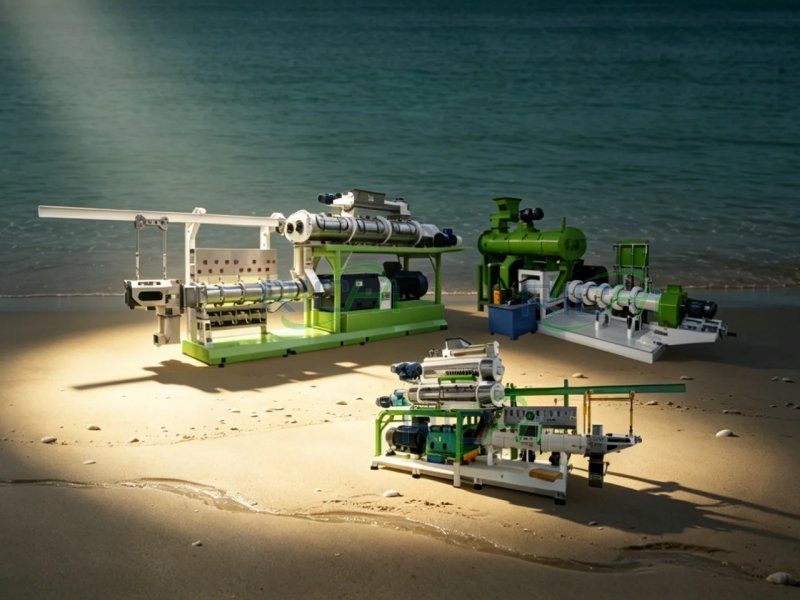
Within the extrusion world, there is an ongoing debate between single-screw and twin-screw configurations. For floating feed production, the advantages of twin-screw designs are difficult to ignore. A twin screw extruder machine for sale typically offers superior mixing, better shear control, and greater flexibility when processing challenging ingredients. Unlike single-screw extruders, which rely primarily on friction to move material through the barrel, twin-screw designs use positive displacement. This allows them to handle ingredients with varying moisture and fat content without sacrificing output consistency.
For manufacturers producing floating feed, this flexibility is crucial. The inclusion of oils and fats, which are essential for energy density in carnivorous fish diets, can cause slippage in single-screw machines. Twin-screw systems, by contrast, maintain a steady conveying action that prevents material holdup and ensures uniform expansion. Additionally, the intermeshing screws provide superior self-wiping action, which reduces residue build-up and simplifies cleaning between production runs. When evaluating equipment options, the twin-screw design consistently emerges as the preferred choice for premium floating feed lines.
The Manufacturer’s Role in Success
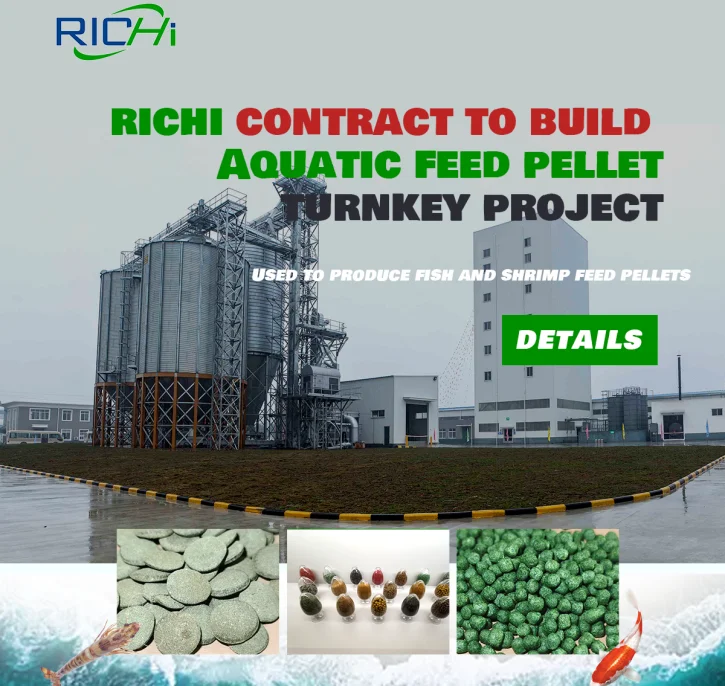
Investing in extrusion equipment is a significant capital decision, and the choice of manufacturer can have long-lasting implications for operational efficiency. Quality engineering, robust construction, and reliable after-sales support are non-negotiable factors. Among the global suppliers, one name stands out for its commitment to innovation and customer satisfaction: Richi manufacture. Their extrusion systems are designed with the needs of commercial feed producers in mind, incorporating advanced control interfaces and energy-efficient drive systems.
Richi manufacture focuses on the entire production ecosystem, offering not just extruders but also ancillary equipment such as dryers, coaters, and conveyors. This integrated approach ensures compatibility across the processing line and simplifies maintenance. Their twin-screw extruders, in particular, have earned a reputation for handling the demands of high-volume production while maintaining the precise conditions needed for consistent pellet quality. Customers benefit from comprehensive training programs and responsive technical support, which minimize downtime and maximize productivity.
Economic Considerations for Feed Producers
The decision to invest in floating feed production technology is driven by clear economic factors. Floating feed commands a premium price in the market compared to sinking feed or farm-made mash. Fish convert floating feed more efficiently because they can consume it at a leisurely pace, with less energy expenditure on locating food. Better feed conversion ratios translate directly to lower production costs per kilogram of fish harvested.
Furthermore, the ability to produce floating feed in-house gives farmers control over ingredient sourcing and formulation. This insulation from commercial feed price volatility is a significant strategic advantage. In regions where imported feeds are subject to tariffs and transportation costs, local production can reduce expenses by 15% to 25%. The capital investment in extrusion technology is typically recovered within two to three years of operation, making it one of the most financially sound upgrades for a growing aquaculture business.
Related Post: https://pelletizerextruder.com/floating-fish-feed-extruder-machine/
Quality Parameters and Troubleshooting
Producing consistent floating feed requires constant monitoring of several key parameters. The moisture content of the mash entering the extruder must be maintained within a narrow range—typically 22% to 28%—to achieve optimal expansion. The steam pressure applied during pre-conditioning affects both the cooking of starches and the final texture of the pellets. Even the wear on the screw elements and barrel liner can influence product quality, as worn components reduce the shear necessary for proper gelatinization.
Experienced operators develop an intuition for these variables, but modern extruders are equipped with sensors and automation that assist in maintaining stability. When issues arise, such as inconsistent buoyancy or excessive fines, the ability to diagnose and correct the problem quickly is critical. This is where access to manufacturer expertise becomes invaluable. A knowledgeable support team can identify whether the issue lies in the formulation, the conditioning parameters, or the mechanical condition of the machine itself.
Sustainability and Efficiency in Feed Processing
The environmental footprint of aquaculture feeds is under increasing scrutiny. Ingredients like fishmeal and fish oil are finite resources, and the industry is actively seeking alternatives from plant and insect sources. Extrusion technology plays a key role in this transition by enabling the inclusion of alternative proteins that may have lower digestibility when unprocessed. The high temperature and shear conditions in the extruder break down antinutritional factors and improve protein availability, making alternative ingredients more viable.
Energy efficiency is another sustainability consideration. Modern extruders incorporate variable frequency drives that adjust motor speed to match load requirements, reducing electricity consumption. Heat recovery systems can capture thermal energy from the cooling process and redirect it to pre-conditioning or drying, further lowering operating costs. As regulatory pressure on industrial energy use mounts, these efficiency features will become increasingly important for maintaining profitability.
Future Trends in Aquafeed Technology
The evolution of extrusion technology shows no signs of slowing. Research is ongoing into closed-loop control systems that use real-time analytics to optimize product quality while minimizing waste. The incorporation of artificial intelligence and machine learning into extruder controls promises to reduce the reliance on operator expertise and improve consistency across shifts. Additionally, the development of multi-stage extruders with separate cooking and forming sections may unlock new possibilities for texture and nutrient retention.
Producers who stay informed about these advancements will be better positioned to adapt and remain competitive. The investment in high-quality equipment today is also an investment in the ability to integrate future upgrades without replacing entire production lines. This forward-looking approach is essential in a sector where technological change is accelerating.
Conclusion
The difference between an average fish farm and an exceptional one often comes down to feed. Floating feed extrusion represents a convergence of food science and mechanical engineering that has transformed aquaculture from a traditional practice into a high-technology industry. The machines that produce this feed are marvels of precision manufacturing, capable of turning raw agricultural commodities into precisely engineered nutrition.
Whether you are establishing a new feed mill or upgrading an existing facility, the choice of extrusion equipment will influence every aspect of your operations—from production capacity to product quality to energy costs. By selecting the right technology and the right manufacturing partner, you can position your business for sustained growth in a rapidly expanding market. The fish are waiting, and the floating feed you produce today will determine the harvest you bring in tomorrow.