






Sawdust pellets have become one of the most widely used biomass fuels due to their renewable nature, high energy density, convenient storage, and environmentally friendly characteristics. They are produced by compressing wood residues such as sawdust, wood chips, and other biomass materials into uniform cylindrical pellets. These pellets are widely applied in residential heating, industrial boilers, biomass power plants, and commercial energy systems.
However, not all sawdust pellets have the same performance. The quality of pellets directly affects combustion efficiency, transportation costs, storage stability, and customer satisfaction. High-quality pellets should have high density, good durability, low moisture content, low ash content, and consistent size. Poor-quality pellets may easily break, produce excessive dust, burn inefficiently, or create operational problems in biomass heating systems.
Many factors influence sawdust pellet quality, including raw material characteristics, moisture content, particle size, production technology, equipment performance, and storage conditions. Among these factors, the performance of the production equipment plays an essential role. A modern wood sawdust pellet machine can provide stable compression force, accurate pellet forming, and consistent production quality, helping manufacturers produce biomass pellets that meet market standards.
Understanding the factors affecting sawdust pellet quality is important for pellet producers who want to improve production efficiency, reduce costs, and build a competitive biomass fuel business.
1. Raw Material Type and Quality
The quality of raw materials is the foundation of sawdust pellet production. Different types of wood contain different levels of lignin, cellulose, moisture, and mineral components, which directly influence pellet performance.
Common raw materials used for sawdust pellets include:
- Pine sawdust
- Spruce sawdust
- Oak sawdust
- Birch sawdust
- Poplar sawdust
- Bamboo residues
- Wood processing waste
Softwood species such as pine and spruce are often preferred because they contain higher natural lignin content. Lignin acts as a natural binder during pelletizing, helping particles stick together under pressure.
Hardwood materials can also produce excellent pellets, but they may require different processing conditions because of their higher density and different fiber structures.
High-quality raw materials should have:
- No chemical contamination
- Low levels of impurities
- Stable composition
- Suitable moisture content
- Appropriate particle size
Sawdust containing paint, glue, plastic, or other chemical additives should not be used for fuel pellet production because it may increase emissions and reduce pellet quality.
2. Moisture Content of Sawdust
Moisture content is one of the most important factors affecting pellet quality. Proper moisture helps sawdust particles bond together during compression, while incorrect moisture levels can cause production problems.
Generally, the ideal moisture content for sawdust pellet production is around 10% to 15%.
Too Much Moisture
If sawdust contains excessive moisture:
- Pellets become soft
- Pellet density decreases
- Drying costs increase
- Combustion efficiency decreases
- Storage problems may occur
High moisture prevents proper compression because water reduces friction between particles during pellet formation.
Too Little Moisture
If sawdust is too dry:
- Pellets may crack easily
- Binding strength decreases
- Production efficiency declines
- More energy is required during compression
A balanced moisture level allows the natural lignin in wood to soften and act as a binder, creating strong and durable pellets.
Professional pellet manufacturers usually install drying systems to adjust moisture levels before pelletizing.
3. Particle Size of Sawdust
Particle size has a significant impact on pellet density and durability.
Before pelletizing, sawdust should usually be processed into uniform particles. Although sawdust is already relatively small, further size adjustment may be required depending on the raw material source.
If particles are too large:
- Pellets may have cracks
- Compression becomes uneven
- Pellet strength decreases
If particles are too fine:
- Energy consumption increases
- Material flow becomes difficult
- Production efficiency may decline
A suitable particle size allows better contact between particles and improves compression performance.
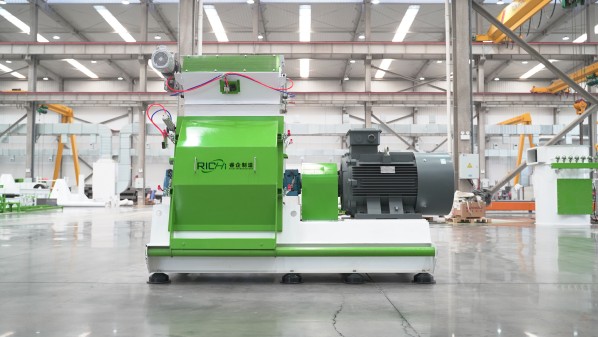
Hammer mills are commonly used to control particle size before materials enter the pelletizing stage. The crushing process ensures that the raw material is suitable for the wood sawdust pellet machine and helps achieve consistent pellet quality.
4. Compression Ratio of the Pellet Die
The pellet die is one of the most important components in pellet production. The compression ratio of the die determines how much pressure is applied to the raw material during forming.
The compression ratio refers to the relationship between die hole length and diameter.
A suitable compression ratio helps produce pellets with:
- Higher density
- Better durability
- Smoother surface
- Lower breakage rate
If the compression ratio is too low:
- Pellets may be loose
- Durability decreases
- More fines are produced
If the compression ratio is too high:
- Energy consumption increases
- Production capacity may decrease
- Machine wear becomes faster
Different wood species require different die designs. Professional manufacturers select suitable dies according to raw material characteristics and production requirements.
5. Performance of Pellet Production Equipment
Equipment quality has a direct influence on pellet quality. Even with excellent raw materials, poor equipment performance can result in unstable production and inconsistent products.
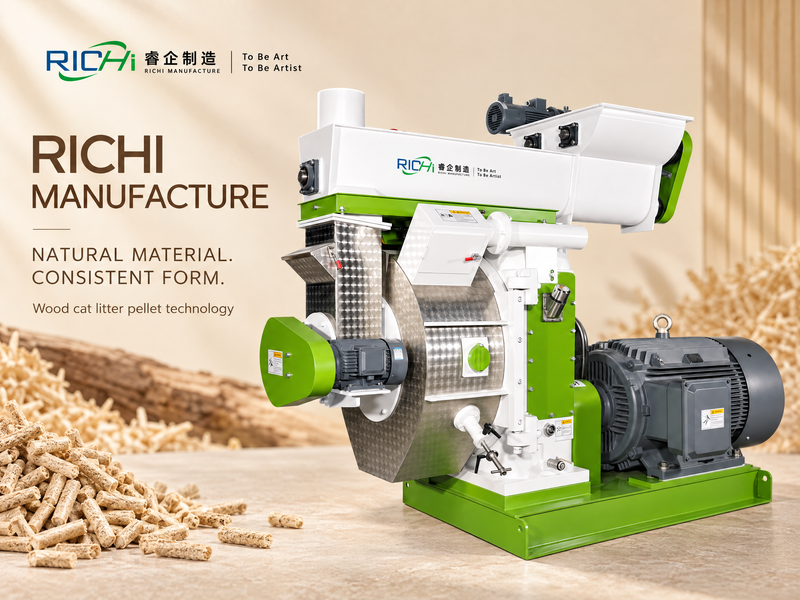
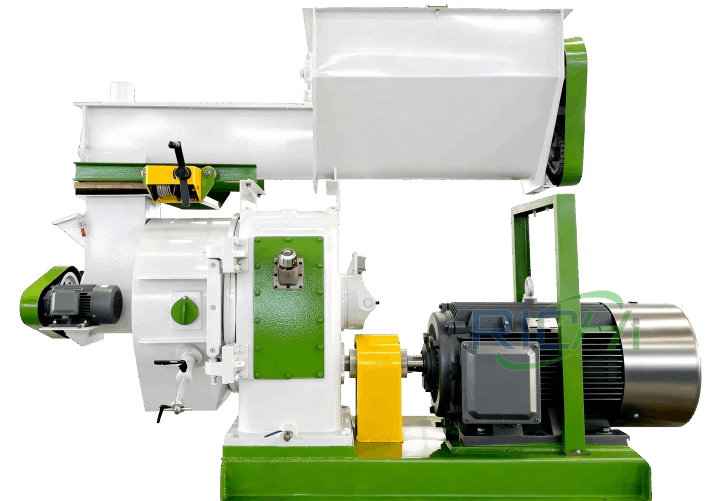
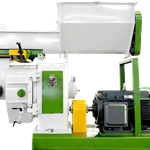
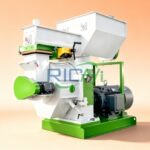
The wood sawdust pellet machine is the core equipment in the pellet production process. It compresses prepared sawdust into dense cylindrical pellets through mechanical pressure.
https://richipelletizer.com/sawdust-pellet-machine
A high-performance pellet machine should provide:
Stable Compression Pressure
Consistent pressure ensures uniform pellet density and strength.
Durable Components
High-quality rollers, dies, bearings, and transmission systems reduce equipment failure and maintain production stability.
Precise Temperature Control
Proper temperature during compression helps activate natural lignin and improves pellet bonding.
Continuous Operation Capability
Industrial pellet production requires equipment that can operate efficiently for long periods.
Modern pellet machines with advanced structures help manufacturers produce high-quality pellets while reducing energy consumption and maintenance costs.
6. Pelletizing Pressure and Temperature
During pellet production, pressure and temperature work together to determine pellet quality.
When sawdust passes through the die under high pressure, friction generates heat. This heat softens lignin contained in wood fibers, allowing particles to bind naturally.
Proper pressure and temperature create pellets with:
- Strong internal bonding
- Smooth surfaces
- High density
- Excellent durability
Insufficient pressure may produce weak pellets, while excessive pressure may increase energy consumption and equipment wear.
Experienced operators adjust operating parameters according to:
- Raw material type
- Moisture level
- Die condition
- Production capacity
Optimizing pelletizing conditions is essential for stable product quality.
7. Addition of Binders and Additives
In most cases, wood sawdust pellets can be produced without additional binders because natural lignin works as a binding agent.
However, certain materials with low lignin content may require additives to improve pellet strength.
Possible additives include:
- Vegetable oils
- Starch-based materials
- Natural binders
The use of additives should be carefully controlled because excessive additives may affect:
- Combustion performance
- Ash content
- Emission levels
- Production costs
For high-quality wood pellets, proper raw material selection and equipment adjustment are usually more important than adding external binders.
8. Cooling Process After Pelletizing
Fresh pellets leaving the pellet machine are hot and relatively soft. They require cooling before storage and packaging.
The cooling process helps:
- Reduce pellet temperature
- Remove excess moisture
- Increase pellet hardness
- Improve durability
Without sufficient cooling, pellets may:
- Break easily
- Produce more dust
- Absorb moisture during storage
A pellet cooler uses airflow to remove heat and moisture from newly produced pellets. Proper cooling ensures that pellets maintain their shape and strength during transportation.
9. Screening and Removal of Fine Particles
After cooling, pellets should be screened to remove broken pieces and powder.
A screening system separates:
- Qualified pellets
- Broken pellets
- Fine dust
High-quality pellets should contain minimal fines because excessive powder causes:
- Transportation losses
- Combustion problems
- Equipment feeding issues
The separated fines can often be returned to the production process, improving material utilization.
Effective screening improves product appearance and ensures customers receive consistent fuel quality.
10. Storage Conditions
Even high-quality pellets can lose performance if stored improperly.
Sawdust pellets are sensitive to moisture absorption. Exposure to water or high humidity may cause pellets to expand, soften, and lose their structure.
Proper storage conditions include:
- Dry warehouses
- Good ventilation
- Protection from rain
- Moisture-resistant packaging
For commercial pellet producers, storage management is an important part of maintaining product quality.
Proper packaging also helps protect pellets during transportation and long-term storage.
11. Pellet Density and Durability
Density and durability are two key indicators used to evaluate pellet quality.
Pellet Density
High-density pellets contain more energy per unit volume. They are easier to transport and require less storage space.
Factors affecting density include:
- Raw material type
- Moisture content
- Compression pressure
- Die design
- Machine performance
Pellet Durability
Durability measures the ability of pellets to resist breaking during handling.
Strong pellets:
- Produce less dust
- Reduce transportation losses
- Improve customer satisfaction
- Perform better in automatic feeding systems
Producing durable pellets requires optimization of the entire production process rather than relying on a single factor.
12. Operator Experience and Production Management
Although advanced equipment is important, skilled operation and management also influence pellet quality.
Experienced operators can identify and adjust problems related to:
- Raw material moisture changes
- Machine performance
- Die wear
- Production temperature
- Pellet appearance
Regular equipment maintenance is also necessary.
Important maintenance activities include:
- Checking roller pressure
- Cleaning equipment
- Replacing worn parts
- Inspecting electrical systems
- Monitoring production parameters
Good management ensures stable production and consistent pellet quality.
13. Quality Testing of Sawdust Pellets
Professional pellet manufacturers conduct regular quality testing to ensure products meet customer requirements.
Common testing indicators include:
Moisture Content Test
Ensures pellets have suitable water levels for storage and combustion.
Density Test
Measures energy concentration and transportation efficiency.
Durability Test
Evaluates resistance to breakage.
Ash Content Test
Determines combustion cleanliness.
Size Measurement
Ensures pellets meet customer specifications.
Quality testing helps producers maintain stable standards and improve production processes.
14. How to Improve Sawdust Pellet Quality
To produce higher-quality pellets, manufacturers can focus on several improvements:
Use Better Raw Materials
Clean and suitable wood residues provide better pellet performance.
Optimize Moisture Control
Maintaining proper moisture improves bonding and durability.
Select Reliable Equipment
A high-quality wood sawdust pellet machine ensures stable compression and consistent production.
Maintain Production Equipment
Regular maintenance prevents quality fluctuations caused by machine wear.
Improve Storage Management
Proper storage protects pellets from moisture damage.
A combination of good materials, advanced technology, and effective management produces premium sawdust pellets.
Conclusion
Sawdust pellet quality is influenced by many factors, including raw material characteristics, moisture content, particle size, die design, production conditions, cooling, screening, and storage. Every stage of the production process contributes to the final performance of biomass pellets.
Among all factors, equipment performance plays a particularly important role. A reliable wood pellet mill provides stable compression, efficient production, and consistent pellet quality, helping manufacturers produce fuel pellets that meet market standards.
By carefully controlling raw materials, optimizing production parameters, and using advanced pellet manufacturing technology, businesses can produce durable, high-density sawdust pellets with excellent combustion performance. As global demand for renewable energy continues to grow, improving sawdust pellet quality will remain essential for achieving success in the biomass fuel industry.