




Controlling wood particle size during crushing is one of the most important steps in biomass processing. Whether wood materials are being prepared for pellet production, briquetting, biomass fuel, animal bedding, or other applications, the final particle size can directly affect processing efficiency and product quality.
Wood materials rarely arrive in a perfectly uniform form. A biomass plant may receive wood chips, sawdust, branches, wood shavings, bark, or other wood residues with significant differences in size and shape. Some particles may already be fine enough for the next processing stage, while others may be too large.
A suitable crushing process reduces these variations and creates a feedstock with a more controlled particle-size distribution.
However, controlling particle size does not simply mean making wood as fine as possible. Excessive grinding can increase electricity consumption, wear, dust generation, and operating costs. The objective is to produce the particle size required by the next stage while maintaining stable capacity and reasonable energy consumption.
This article explains how to control wood particle size during crushing, including the role of screens, rotor speed, hammer design, moisture, feeding rate, raw material characteristics, and equipment selection. It also explains how a wood sawdust grinder can be used when sawdust requires additional size reduction.
Why Wood Particle Size Matters
Particle size influences almost every stage of biomass processing.
The most important areas affected by particle size include:
- Drying
- Material conveying
- Mixing
- Pelletizing
- Briquetting
- Combustion
- Storage
- Product density
- Process stability
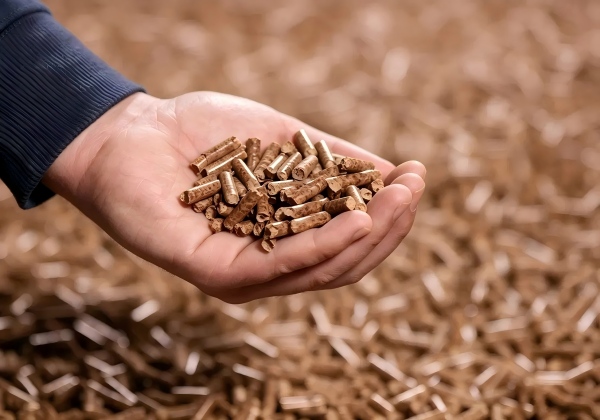
For wood pellet production, suitable particle size allows the material to enter the pellet mill more consistently.
If the feed contains excessive oversized pieces, the pellet mill may experience unstable feeding or inconsistent compression.
If the material is ground too finely, electricity consumption can increase without necessarily improving pellet quality.
Therefore, particle size should be treated as a process parameter rather than simply a machine output specification.
What Is Wood Particle Size Distribution?
Wood particle size distribution refers to the proportion of particles with different dimensions in a processed material.
For example, a batch may contain:
- Fine sawdust
- Medium-sized wood particles
- Coarse wood chips
- Oversized pieces
A crushing machine does not always produce particles of exactly the same size.
Instead, it produces a distribution of particle sizes.
This is why screening is often used after crushing.
A screen separates particles according to size and can return oversized material for additional processing.
A simplified process is:
Wood Feed → Crushing → Screening → Qualified Material
↓
Oversized Material → Return to Crusher
This circulation helps improve the consistency of the final material.
Step 1: Understand the Initial Wood Material
The first step in particle-size control is understanding the raw material.
Different materials require different crushing conditions.
Important characteristics include:
- Initial particle size
- Moisture content
- Wood species
- Density
- Fiber structure
- Hardness
- Shape
- Bulk density
- Presence of bark
- Presence of contaminants
For example, dry softwood sawdust behaves differently from wet hardwood chips.
Similarly, long wood shavings may behave differently from compact wood particles.
Therefore, equipment settings should be selected according to the actual feedstock.
Step 2: Define the Required Final Particle Size
Before adjusting a crusher, determine what particle size is actually required.
This depends on the final application.
Wood Pellet Production
For wood pellets, the particle size should be suitable for the pellet mill and the desired pellet specifications.
The ideal size can depend on:
- Pellet diameter
- Wood species
- Moisture
- Die compression ratio
- Pellet mill design
- Raw material structure
Biomass Fuel
Fuel applications may tolerate a broader range of particle sizes depending on the combustion system.
Briquettes
Briquette production may require a different particle-size distribution because the material is compacted using a different process.
Animal Bedding
Bedding products can have specific requirements for particle size, pellet formation, and absorbency.
The correct particle size should therefore be defined by the final product rather than by the crushing machine alone.
Step 3: Choose the Appropriate Crushing Equipment
Different machines are designed for different stages of size reduction.
Wood Chipper
A wood chipper is suitable for:
- Logs
- Large branches
- Tree trunks
- Large forestry residues
It performs coarse size reduction.
Wood Crusher
A wood crusher can reduce larger wood pieces and wood chips into smaller particles.
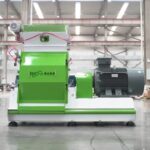
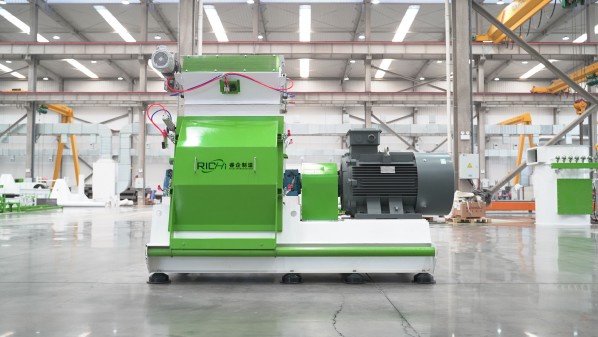
Hammer Mill
Hammer mills are commonly used for biomass grinding.
They use rotating hammers to impact the material inside a grinding chamber.
A screen controls the size of particles that can leave the machine.
(Related machine:https://pelletisingmachine.com/sawdust-hammer-mill/)
Wood Sawdust Grinder
A wood sawdust grinder can be used when sawdust or fine wood residues need additional size reduction.
This equipment is particularly useful when the raw material contains oversized particles or when the downstream process requires a more uniform material.
However, a wood sawdust grinder is not necessarily required for every sawdust processing line.
If the incoming sawdust already meets the required particle-size specification, additional grinding may be unnecessary.
Step 4: Use the Screen to Control Particle Size
For many hammer mills, the screen is one of the most important particle-size control components.
The screen contains openings through which processed material must pass.
If a particle is larger than the opening, it remains inside the grinding chamber and continues to be impacted.
Once it becomes small enough, it passes through the screen.
Therefore:
Smaller screen opening → generally finer output
Larger screen opening → generally coarser output
However, screen size also affects throughput.
A very fine screen can increase grinding resistance and reduce production capacity.
It may also increase electricity consumption.
Therefore, screen selection should balance:
- Final particle size
- Capacity
- Energy consumption
- Material characteristics
- Downstream requirements
Step 5: Select the Right Screen Opening
Choosing the screen opening requires practical testing.
If the material leaving the machine is too coarse, a smaller screen opening may be necessary.
If the machine produces material that is unnecessarily fine or capacity is too low, a larger opening may be more appropriate.
The correct screen is therefore not necessarily the smallest available.
For pellet production, the best screen is the one that produces a suitable feedstock while maintaining stable production.
Manufacturers can often provide different screen configurations so that the machine can be adjusted for different materials and applications.
Step 6: Control Rotor Speed
Rotor speed can also influence crushing performance.
A higher rotor speed generally increases the frequency and intensity of impacts.
This can help reduce particle size, but it can also increase:
- Energy consumption
- Heat generation
- Wear
- Dust generation
Lower speeds may reduce the intensity of grinding and increase the proportion of larger particles.
However, the appropriate speed depends on the machine design.
Operators should follow the manufacturer’s recommended operating range rather than changing rotor speed without considering the mechanical design.
In some machines, speed adjustment can be achieved through a variable-frequency drive or other control system.
Step 7: Control the Feeding Rate
Feeding rate is another important factor.
If too much wood enters the crusher at once, the grinding chamber can become overloaded.
This can cause:
- Motor overload
- Reduced throughput
- Larger particle size
- Screen blockage
- Increased vibration
- Unstable operation
If the feeding rate is too low, the machine may not be fully utilized.
A controlled and stable feeding system helps maintain consistent crushing conditions.
For industrial pellet plants, conveyors, screw feeders, or other controlled feeding equipment can be integrated with the crushing system.
Step 8: Control Moisture Content
Moisture has a strong effect on wood crushing.
Wet wood can behave differently from dry wood during grinding.
Excessive moisture can cause:
- Material sticking
- Screen blockage
- Reduced throughput
- Poor particle separation
- Increased power consumption
Very dry material can be easier to crush but may generate more dust.
Therefore, moisture should be controlled within a range suitable for the selected equipment.
For wood pellet production, the crushing and drying stages should be designed together.
A typical process can be:
Wood Chips → Crushing → Drying → Fine Grinding → Pelletizing
Alternatively:
Wood Chips → Drying → Grinding → Pelletizing
The correct arrangement depends on the initial moisture and particle size.
Step 9: Maintain the Hammers or Cutting Tools
The condition of the crushing tools directly affects particle size.
In a hammer mill, worn hammers may reduce grinding efficiency.
The material may require more passes through the chamber before reaching the required size.
This can increase:
- Energy consumption
- Processing time
- Operating temperature
- Production instability
Regularly inspect the hammers and replace or adjust them according to the equipment manufacturer’s recommendations.
For machines using knives or cutting tools, sharp and properly positioned knives are similarly important.
Step 10: Keep the Rotor Properly Balanced
Rotor balance is important for stable operation.
An unbalanced rotor can cause excessive vibration.
This can accelerate wear on:
- Bearings
- Shafts
- Hammers
- Housing
- Drive components
Excessive vibration can also make it difficult to maintain stable crushing conditions.
Professional equipment should therefore use appropriate rotor balancing procedures during manufacturing and maintenance.
Step 11: Use Screening to Improve Uniformity
Even after crushing, the material may contain some oversized particles.
A screening machine can separate the material into different size fractions.
A typical process is:
Crusher → Vibrating Screen → Qualified Material
The oversized fraction can be returned to the crusher.
This creates a closed-loop size-control process.
Screening can be particularly useful for commercial pellet plants where stable feedstock quality is important.
Step 12: Avoid Excessive Fine Grinding
One of the most important principles in particle-size control is avoiding unnecessary grinding.
Suppose a pellet mill performs effectively with a certain particle-size distribution.
Grinding the material significantly finer may not improve the final pellets.
Instead, it can increase:
- Electricity costs
- Hammer wear
- Screen wear
- Dust
- Heat
- Maintenance requirements
The objective should therefore be:
Suitable particle size + stable capacity + reasonable energy consumption
rather than:
Smallest possible particle size
How Particle Size Affects Wood Pellet Production
Particle size can influence pellet formation in several ways.
Material Feeding
Uniform particles generally flow more predictably through the feeding system.
Compression
During pelletizing, the particles are compressed through die holes.
Suitable particle size can help create a more consistent compressed structure.
Pellet Density
Particle characteristics can affect how closely the wood particles pack together.
Pellet Durability
Particle size is one of several factors affecting pellet durability.
However, it is important to remember that pellet quality depends on many factors, including moisture, wood species, raw material composition, die compression, roller condition, and pellet mill operation.
Crushing alone cannot guarantee high-quality pellets.
How Particle Size Affects Drying
Particle size is also important before the drying stage.
Smaller particles generally have greater surface area relative to their mass.
This can improve contact with hot air and facilitate moisture evaporation.
However, extremely fine particles can create more dust and may increase the difficulty of air handling.
Therefore, an efficient biomass drying system requires a balance between particle size and drying performance.
The dryer should be designed according to:
- Initial moisture
- Final moisture
- Material particle size
- Feed rate
- Required evaporation
- Heat source
- Airflow
How to Control Particle Size with a Wood Sawdust Grinder
A wood sawdust grinder can be used as a secondary grinding machine when the existing sawdust is too coarse for the intended application.
The process can include:
Sawdust Feeding → Grinding → Screening → Finished Material
The grinder reduces larger particles through mechanical impact or other size-reduction forces.
The screen or grinding configuration can then determine the final output.
For a pellet plant, the grinder should be matched with the pellet mill.
For example, if the pellet mill requires a certain feed particle distribution, the grinder should be configured to produce that material without unnecessary over-grinding.
Particle Size Control for Different Wood Materials
Sawdust
Sawdust generally requires less size reduction than wood chips.
The main goal may be removing oversized particles and achieving better uniformity.
Wood Chips
Wood chips may require more intensive crushing before pelletizing.
A hammer mill or crusher can reduce the chips to a smaller particle size.
Branches
Branches generally require chipping before fine crushing.
A typical process is:
Branches → Chipper → Crusher → Grinder → Pellet Mill
Wood Shavings
Shavings can be irregular and lightweight.
Depending on the application, they may require additional grinding.
Bark
Bark can have different hardness and moisture characteristics from wood.
The crushing system should be selected according to its actual properties.
How to Control Particle Size in a Wood Pellet Production Line
Particle-size control should be integrated into the complete process.
A typical wood pellet line may include:
1. Raw Material Receiving
Inspect incoming wood for moisture, size, and contaminants.
2. Chipping
Reduce large logs and branches into manageable chips.
3. Crushing
Reduce wood chips and other coarse material.
4. Screening
Separate properly sized material from oversized particles.
5. Drying
Reduce moisture to a suitable level for pelletizing.
6. Fine Grinding
Use a hammer mill or grinder when further size reduction is necessary.
7. Pelletizing
Compress the prepared biomass into pellets.
8. Cooling
Reduce pellet temperature and stabilize the product.
9. Final Screening
Remove fines and broken pellets.
10. Packing
Pack the finished pellets for storage or transportation.
This process can be customized according to the feedstock.
Factors That Can Cause Particle Size to Change
Even when the crusher settings remain unchanged, output particle size may vary.
Possible causes include:
Changes in Wood Moisture
Different moisture levels can affect grinding behavior.
Changes in Wood Species
Hardwood and softwood can have different grinding characteristics.
Changes in Feed Size
Larger incoming particles require more size reduction.
Worn Hammers
Worn grinding tools can reduce processing efficiency.
Screen Wear
Damaged or enlarged screen openings can affect output size.
Feeding Fluctuations
Uneven feeding can create unstable grinding conditions.
Foreign Materials
Metal, stones, or other contaminants can affect the crushing process and damage components.
Regular monitoring helps identify these problems early.
Dust Control During Particle-Size Reduction
The finer the wood material becomes, the greater the potential for dust generation.
This is especially important when processing dry sawdust.
A complete crushing system may include:
- Cyclone
- Bag filter
- Dust collector
- Exhaust fan
- Air ducts
- Dust discharge system
Good airflow helps remove dust from the grinding chamber and transport it to the collection system.
The dust-control system should be appropriately sized for the crusher and material.
Industrial facilities should also follow applicable workplace, fire, and environmental safety requirements.
How to Improve Particle-Size Consistency
Several practices can improve consistency.
Use Stable Raw Materials
Avoid large changes in material characteristics whenever possible.
Control Feeding
Use a stable feeding rate.
Inspect Screens
Replace damaged or worn screens.
Maintain Hammers
Keep crushing tools in suitable condition.
Monitor Moisture
Measure moisture rather than relying only on visual inspection.
Use Screening
Separate oversized particles and return them for additional crushing.
Monitor Motor Load
Changes in motor current can indicate changes in feed conditions or machine loading.
Check Final Material Regularly
Sampling and particle-size analysis can confirm whether the crusher is meeting the required specification.
How to Select Equipment for Wood Particle-Size Control
Before purchasing a crusher or grinder, prepare the following information:
Raw Material
What type of wood are you processing?
Initial Size
What is the largest particle entering the machine?
Moisture
What is the typical moisture range?
Final Particle Size
What size do you need?
Capacity
How many tons per hour must be processed?
Application
Will the material be used for pellets, briquettes, fuel, bedding, or another purpose?
Operating Hours
Will the machine operate continuously or intermittently?
Dust Collection
What type of dust-control system is required?
Wear Parts
What are the expected replacement intervals and costs?
Providing this information allows equipment manufacturers to make a more accurate recommendation.
Wood Crushing Equipment and Complete Pelletizing Solutions
A wood crushing machine should not be evaluated independently from the rest of the production line.
For a commercial wood pellet plant, the crushing section must match the capacity of the dryer and pellet mill.
For example:
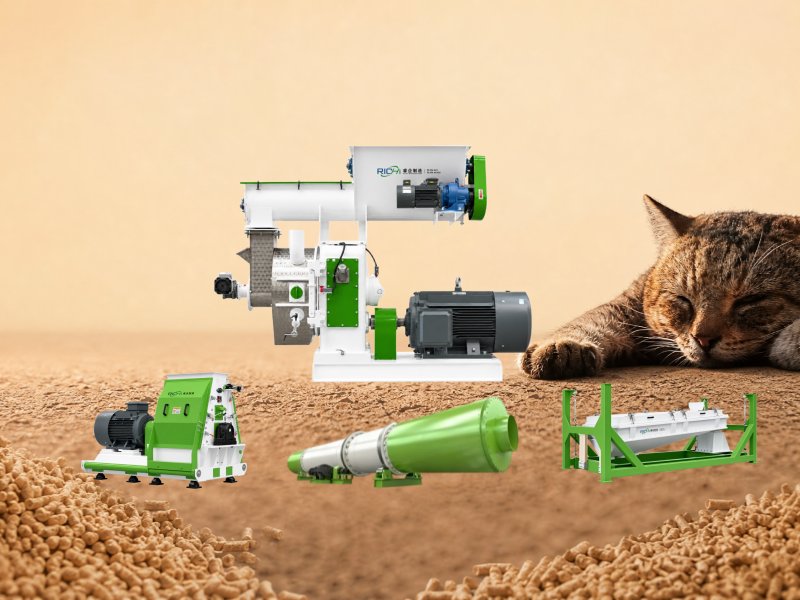
Wood Chipper → Wood Crusher → Screening → Dryer → Hammer Mill/Wood Sawdust Grinder → Pellet Mill → Cooler → Screen → Packing
If the crusher is too small, it can restrict the entire production line.
If it is significantly oversized, the additional investment may not provide a practical benefit.
The best system is one in which the major processing stages are properly balanced.
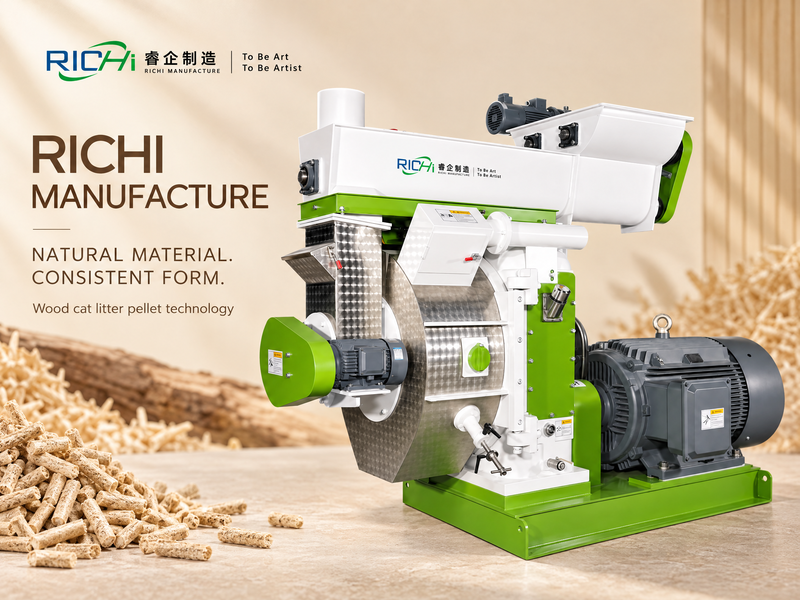
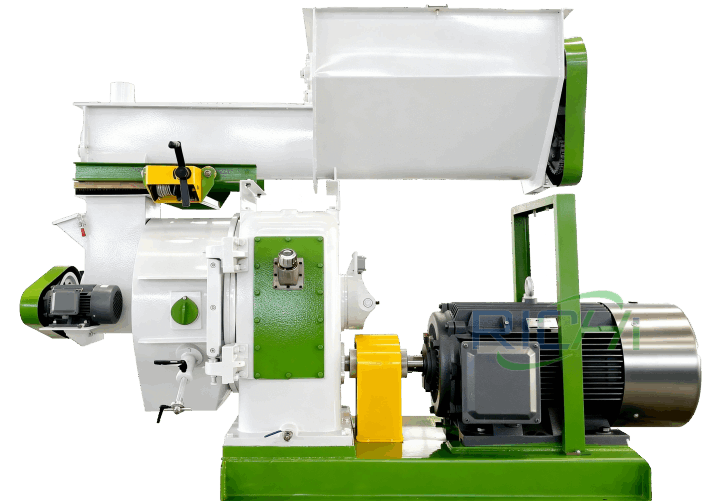
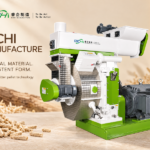
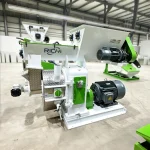
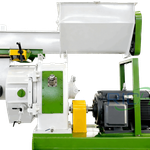
RICHI Machinery Manufacture provides biomass processing equipment and turnkey engineering solutions for wood pellet production. Depending on the customer’s material and requirements, the system can include wood chippers, crushers, hammer mills, wood sawdust grinders, dryers, pellet mills, coolers, screens, conveyors, dust collectors, and packing systems.
The complete process can be customized according to raw material type, initial particle size, moisture, required particle size, production capacity, and final pellet application.
Frequently Asked Questions
What is the best way to control wood particle size?
The most effective approach is to combine appropriate crushing equipment with the correct screen, controlled feeding, suitable moisture, regular maintenance, and screening.
What machine is used to make wood chips smaller?
A wood crusher or hammer mill can reduce wood chips into smaller particles. Large logs and branches normally need to be processed by a wood chipper first.
Can a wood sawdust grinder make sawdust finer?
Yes. A wood sawdust grinder can further reduce sawdust and fine wood residues when the existing material is too coarse or inconsistent for the intended application.
Does screen size determine particle size?
The screen is an important factor, particularly in hammer mills, because particles normally need to be small enough to pass through the screen before discharge. However, particle size is also affected by moisture, material characteristics, rotor speed, hammer condition, and feeding rate.
Should wood be ground as fine as possible before pelletizing?
No. Excessive grinding can increase energy consumption and wear without providing additional benefits. The target should be a particle size suitable for the pellet mill.
Does moisture affect wood particle size?
Yes. Moisture can change the way wood breaks during crushing and may cause sticking or screen blockage when the material is too wet.
Can one crusher process all types of wood?
Not necessarily. Logs, branches, chips, sawdust, and mixed wood waste have different size-reduction requirements. A multi-stage system may be more appropriate for some projects.
How can oversized particles be handled?
A screening machine can separate oversized particles and return them to the crusher for additional processing.
Is particle size important for wood pellet quality?
Yes, but it is only one factor. Moisture, raw material characteristics, die compression, pellet mill settings, cooling, and other process conditions also affect pellet quality.
Conclusion
Controlling wood particle size during crushing is essential for efficient biomass processing. Proper size reduction can improve material flow, drying, pelletizing, briquetting, and overall production stability.
The process starts with understanding the raw material. Logs and branches normally require coarse chipping before further crushing. Wood chips may require hammer milling or crushing, while sawdust may only need additional grinding when its particle size is unsuitable.
A wood sawdust grinder can provide additional size reduction for sawdust and fine wood residues, helping create a more consistent feedstock when required.
Particle size should be controlled through several factors, including screen opening, rotor speed, feeding rate, moisture, hammer condition, and screening. At the same time, excessive grinding should be avoided because finer particles are not automatically better.
For wood pellet production, the most effective strategy is to design crushing together with drying, pelletizing, cooling, screening, and packing. A balanced system can provide the required particle size while maintaining stable capacity, reasonable energy consumption, and manageable wear.
Before selecting equipment, clearly define your raw material, initial particle size, moisture, required final particle size, capacity, and final application. These parameters provide the foundation for designing an efficient wood crushing and pelletizing system.