





Rice milling produces large quantities of rice husk, which can be difficult to store and transport in its loose form. Pelletizing provides a way to densify this agricultural residue into a more uniform biomass fuel.
The rice husk pellet machine is the core forming equipment, but stable production also depends on raw material preparation, moisture control, grinding, cooling, and screening.
Understanding Rice Husk as a Pelletizing Material
Rice husk consists mainly of fibrous plant material and has a relatively low bulk density when stored loose.
Its physical characteristics can affect feeding and pellet formation. Before pelletizing, the material should therefore be checked for moisture, particle size, impurities, and storage conditions.
The required process can vary between rice mills because the condition of the husk is not always the same.
Raw Material Preparation
The first step is to remove foreign materials that could affect the equipment or finished pellets.
If the rice husk contains oversized pieces or other coarse materials, a suitable crushing or size-reduction process may be required.
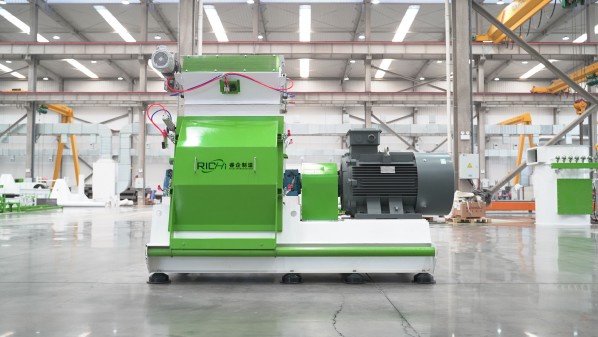
Grinding can then produce a more consistent material for the pellet mill.
A uniform particle size helps improve material feeding and allows the biomass to move more consistently through the die during compression.
Moisture Control
Moisture is an important factor in biomass pellet production.
Rice husk that is already relatively dry may require little additional drying. However, material with excessive moisture can make pellet formation more difficult and may reduce production stability.
When drying is necessary, a rotary dryer can continuously reduce moisture before the material enters the pelletizing section.
The dryer should be selected according to the actual moisture content and required throughput rather than simply using a standard configuration for every project.
Pelletizing Process
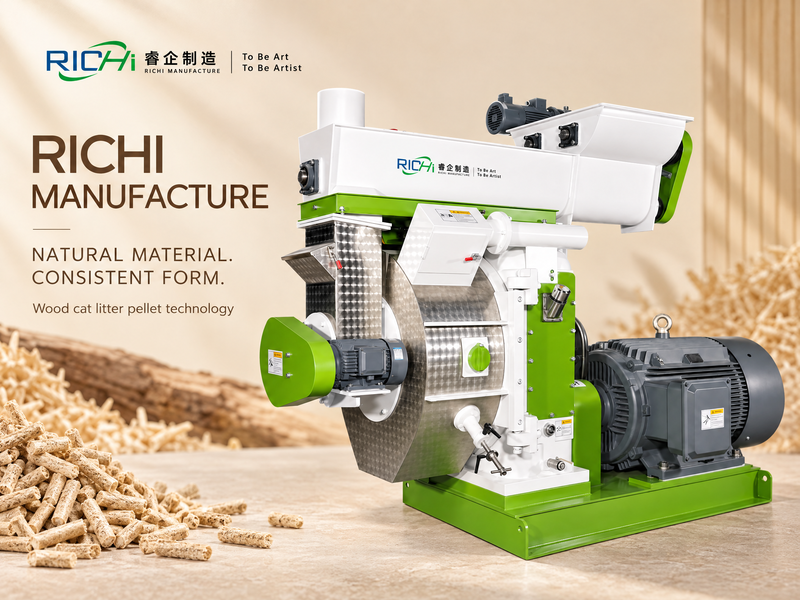
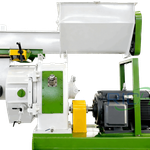
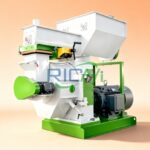
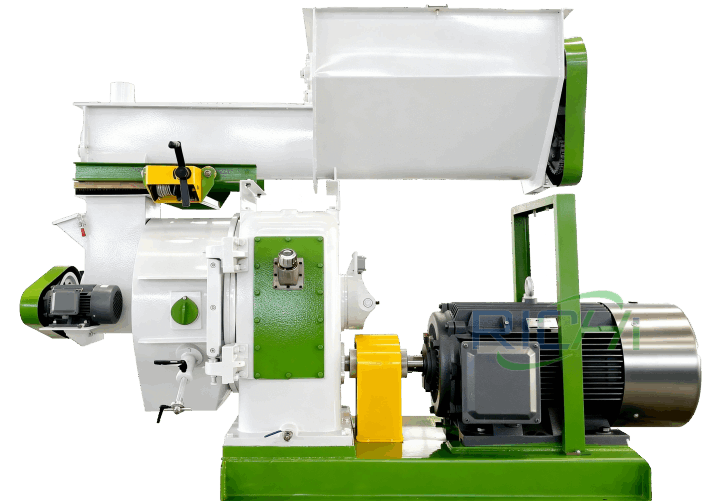
After preparation, the rice husk is fed into the pellet mill.
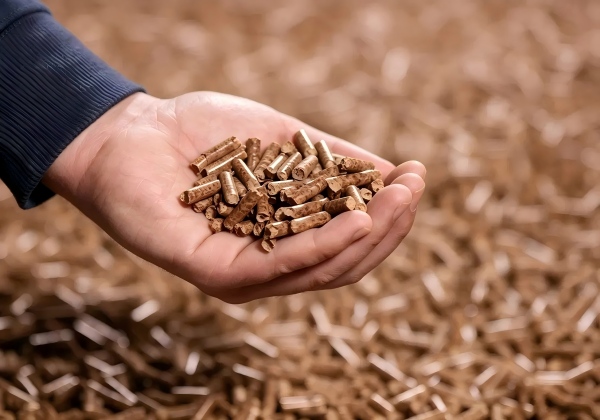
Inside the machine, rollers compress the biomass against a die. The pressure forces the material through the die holes, producing cylindrical pellets.
The die diameter determines the approximate pellet diameter. Production performance is influenced by several factors, including moisture, particle size, material characteristics, die configuration, and operating conditions.
For commercial projects, the pelletizing system should be matched with the upstream grinding and drying capacity.
Cooling and Screening
Fresh biomass pellets leave the pellet mill with heat generated during compression.
A pellet cooler can reduce their temperature before storage or packing. Cooling also helps the pellets become more stable during subsequent handling.
After cooling, a screen separates loose fines and undersized pellets from the finished product.
Depending on the production system, suitable fines may be returned to the pelletizing section instead of being discarded.
Comparing Other Biomass Materials
Rice husk is only one of many agricultural residues that can be converted into biomass pellets.
Materials such as bagasse, straw, corn stalks, peanut shells, and sawdust can also be processed with suitable equipment. However, each material has different moisture, fiber, density, and particle characteristics.
For example, a 5T/H cotton stalk pellet mill may use a similar basic compression principle, but the preparation process can differ depending on the straw condition.
This is why equipment selection should always begin with raw material testing.
Typical Equipment Configuration
A commercial rice husk pellet production system may include:
- Raw material receiving and feeding
- Cleaning equipment when necessary
- Crusher or grinding equipment
- Drying system when required
- Pellet mill
- Pellet cooler
- Screening machine
- Conveyors
- Storage equipment
- Packing machine
A small project may not require every component.
If the rice mill already provides clean and suitably dry husk, the production line can potentially use a simpler preparation section.
Fuel Applications
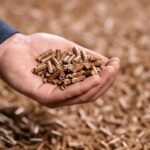
Rice husk pellets can be used as biomass fuel in suitable boilers, heating systems, and industrial energy applications.
Pelletizing increases the bulk density of the loose material and produces a more standardized shape. This can make mechanical feeding and transportation more convenient.
The actual fuel performance depends on the properties of the raw material and the production conditions.
Planning Before Equipment Purchase
Before selecting equipment, project owners should determine:
- Daily rice husk availability
- Initial moisture content
- Required production capacity
- Pellet diameter
- Existing preparation equipment
- Available electricity and heat source
- Storage capacity
- Packaging requirements
These factors help determine whether the project needs additional crushing, grinding, drying, cooling, or storage equipment.
A well-designed system should maintain a balanced material flow from raw material preparation through pelletizing and finished-product handling.
For more information about biomass pellet production equipment and different material processing solutions, read more before finalizing your equipment configuration.
Related Post: https://pelletizerequipment.com/sawdust-pellet-machine-for-sale/