
What Are the Top Pellet Mill Brands for Wood Pellet Production?

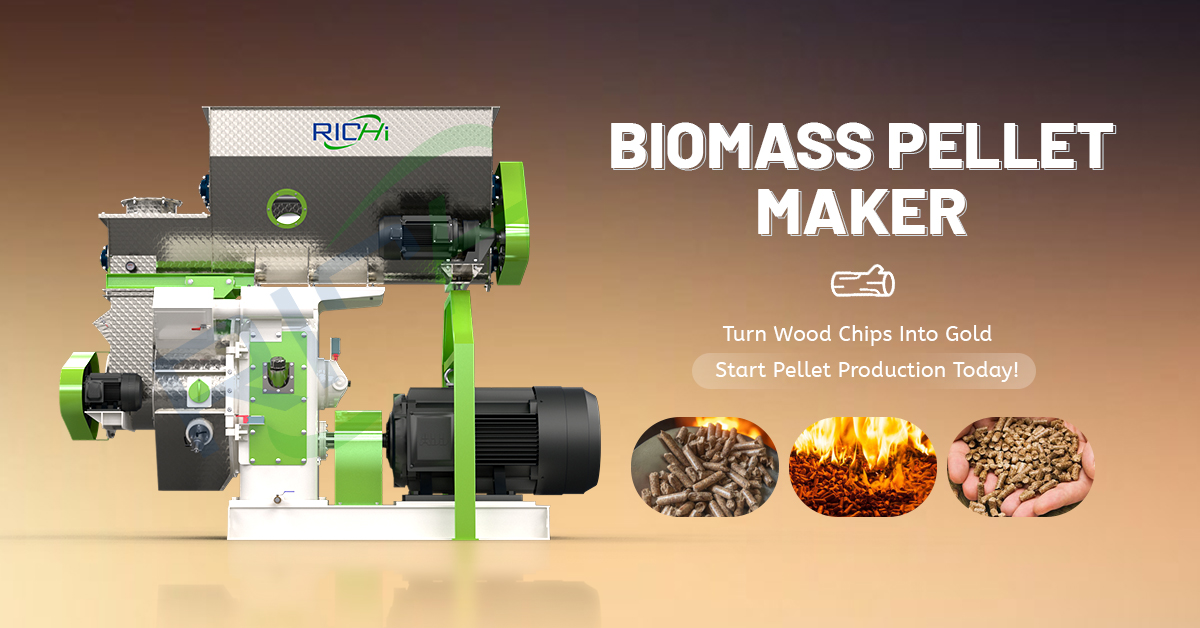
biomass pellet maker

Wood Pellet Industry · Buyer Intelligence Report
March 2026 · Vol. IV

What Are the Top Pellet Mill Brands
for Wood Pellet Production?

A comprehensive buyer’s guide covering market economics, machine specifications, cost-per-ton benchmarks, and investment returns — told from the operator’s perspective.

5 Brands
ROI Data
2035 Outlook

$16.7B
Market 2025

$24.3B
By 2030

7.8%
CAGR

57%
Europe share

50M t
2024 Production

774
EU pellet plants

The Investment Case That Can’t Be Ignored

The global wood pellet market was valued at $16.68 billion in 2025 and is on track to hit $24.3 billion by 2030 at a CAGR of 7.8% (Knowledge Sourcing Intelligence). Total production reached approximately 50 million metric tons in 2024 — a 6.8% year-on-year increase — driven by Europe’s renewable energy mandates and surging Asian imports.

The EU alone consumed an estimated 25.5 million metric tons of wood pellets in 2024 — up from 24.5 million in 2023. The UK imported over 8.5 million metric tons in 2023 for biomass energy plants like Drax. Japan imported 4.2 million metric tons in 2023 — a 23% increase year-on-year. South Korea: 3.8 million metric tons. These are not projections; these are confirmed trade flows already reshaping the machine market.

For producers, the economics are compelling: production cost typically runs $60–$80 per ton while industrial pellets sell at $100–$203 per ton globally. The machine that determines your cost per ton is the most consequential purchase in your entire operation. This guide tells you who makes them and what separates them.

WOOD PELLET DEMAND DRIVERS

EU RED III — 32% renewable energy target by 2030; bioenergy a mandated component
UK subsidy extension — £760M extended 2027–2030 for biomass electricity generation incl. Drax
Japan FiT — 3M+ t/yr imported under national feed-in tariff; long-term contracts to 2029
India co-firing — 5–10% biomass co-firing mandated in all thermal power plants
Vietnam expansion — 5 new wood pellet plants approved in 2024; combined 1.2M t/yr capacity

What Operators Actually Ask Before Buying

Before shortlisting brands, experienced wood pellet producers answer these five questions. The answers eliminate most options before a single price is quoted.

Raw material type

Softwood sawdust (10–15% moisture, optimal for ring-die) behaves completely differently from hardwood chips (higher lignin, higher compression ratio needed) or rice husk (silica content, abrasive, needs die hardness ≥60HRC). Moisture content must be 10–15% before pelleting — and your dryer selection determines whether your pellet mill runs at peak efficiency or fights wet feed all day.

Target output and grade

Industrial utility-grade pellets (6–8mm, bulk, co-firing) require different die specs and durability ratings than ENplus A1 residential pellets (6mm, bagged, ≥97.5% durability, ≤0.7% ash). ENplus A1 commands a 10–15% price premium but demands higher process control — not every mill can consistently hit it without premium dies and accurate conditioning.

Energy cost environment

Ring-die wood pellet mills consume 70–100 kWh per ton — a 30% energy advantage over screw extruders (≥120 kWh/ton). At EU electricity rates of €0.15–0.25/kWh, a 5 t/h mill running 6,000 hours/yr spends $315,000–$750,000 on electricity annually. A machine that saves 20% energy saves $63,000–$150,000 per year — often more than the price difference between brands.

Capital vs. operating cost trade-off

A ring die with 42CrMo alloy steel lasts 800–1,000 hours. A standard die lasts 300–500 hours. On a 5 t/h line running continuously, that’s 3 vs. 8 die changes per year at $300–$1,200 per die — a $2,100–$7,000 annual difference in maintenance cost alone. Premium components pay for themselves quickly at commercial scale.

5
What is your investment timeline and geography?

A buyer in Malaysia building their first 3 t/h line is not the same buyer as a Canadian operator expanding to a third 20 t/h facility. Geography determines service availability, parts logistics, and regulatory certification requirements (CE for EU, ISO 9001 for international, ENplus certification for premium residential pellets). Get the geography wrong and even the best machine becomes a maintenance liability.

The Real Numbers: Cost, Revenue & Return

PRODUCTION COST STRUCTURE (per metric ton of wood pellets)
Source: Bioenergy Europe, RICHI Machinery, Industry benchmarks 2025
$35–50
Raw material (sawdust, wood chips, forest residues)

$9–15
Electricity (70–100 kWh × $0.10–0.15/kWh)

$6–12
Drying (fuel or waste heat — largest variable cost)

$5–8
Labor, maintenance, die/roller replacement

$60–85
Total production cost (Bioenergy Europe avg.)

INDUSTRIAL PELLET PRICE
$100–$203/ton
Global avg. · U.S. EIA Oct 2025: $203.18/ton export

GROSS MARGIN PER TON
$20–$118/ton
At 5 t/h × 6,000 hrs = $600K–$3.5M gross/yr

ENplus A1 PRICE PREMIUM
+10–15%
Certified residential grade commands premium pricing over industrial bulk

TYPICAL PAYBACK PERIOD
2–5 years
Well-sited 20,000–50,000 t/yr plant; machine life 10+ years

The Top Pellet Mill Brands for Wood Pellet Production

NO.01
RICHI Machinery
EDITOR’S CHOICE FOR VALUE + RANGE
$15K–$85K / unit · 0.5–10+ t/h

Founded 1995 · Zhengzhou, China · 140+ countries · 350+ wood projects completed

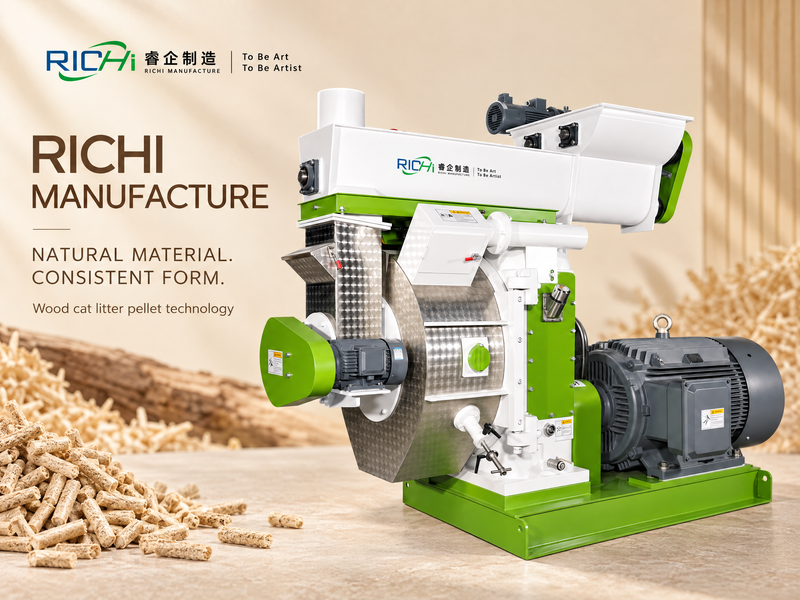
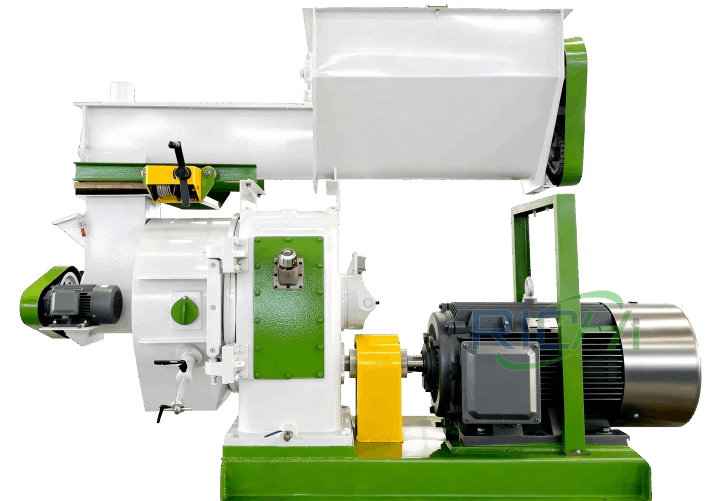
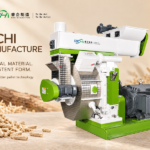
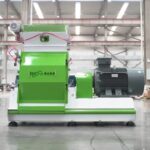
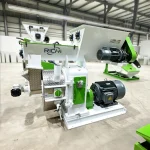
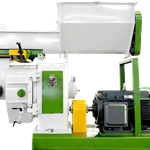
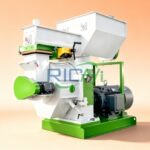
RICHI’s MZLH ring-die wood pellet mill series is built for operators who need reliable, certified, cost-effective wood pellet production across a wide range of feedstocks — from clean sawdust to wood chips, agricultural residues, bamboo, hemp, and mixed waste wood. The ring-die design achieves pellet density ≥1.0 g/cm³ and durability ≥97.5% — the ENplus A1 threshold — at a capital cost 30–50% below Western OEM equivalents.

The mechanical architecture is engineered for low operating cost: unit power consumption of 70–100 kWh/ton (versus ≥120 kWh/ton for screw extruders), 42CrMo alloy ring dies lasting 800–1,000 hours (vs. 300–500 hours for standard dies), PLC fully automatic control for continuous operation, and imported Swedish/Japanese bearings throughout. RICHI also offers the only commercially available wood pellet mill with a patented ventilating-from-shaft-end system that boosts output on difficult low-adhesive materials (rice husks, palm shells, coconut shells) by over 25%.

VERIFIED WOOD PELLET PROJECT REFERENCES
🇵🇱 Poland: 2 t/h · straw + wood chips · EN heating pellets · customer: “excellent durability, low fines”
🇿🇦 South Africa: 3 t/h complete line · commissioned in 10 days · lifelong after-sales service confirmed
🇷🇴 Romania: 6–8 t/h · FOB $700K+ · strict EU ENplus certification · 50-day installation
🇮🇩 Indonesia: 4 t/h · rice husk + acacia chips · 25–30% moisture input · export biomass grade
🇩🇪 Germany: active · wheat straw + sunflower hulls · domestic heating market grade
🇺🇸 USA: active · hemp pellets · 10–12 t/h · heating + industrial applications

Honest caveat: For buyers in North America or Northern Europe requiring an engineer on-site within hours, RICHI’s remote technical support (30-minute phone/video response) may not substitute for CPM or ANDRITZ’s local field engineers. Factor geography into the comparison.

MZLH SERIES — WOOD OUTPUT
Model Wood t/h FOB Price
MZLH320 0.5–0.7 ~$15K
MZLH350 1–1.2 ~$20K
MZLH420 2–2.5 ~$35K
MZLH520 3–4 ~$50K
MZLH678 4–5 ~$66K
MZLH858 6–8+ ~$80K
CERTIFICATIONS
ISO9001 · CE (EU) · BV (France) · SGS (Switzerland) · TÜV (Germany) · RTN (Russia) · CU-TR
Pellet output: ENplus A1 and DINplus grade achievable

NO.02
CPM (California Pellet Mill)
LARGEST GLOBAL MARKET SHARE
~17% global pellet market

Founded 1883 · Waterloo, Iowa, USA · 140 years wood pellet engineering

CPM holds approximately 17% of the global pellet machine market (Future Market Insights, 2025) — the largest single-brand share of any manufacturer. The PM1200DD (Direct Drive, unveiled at LIGNA 2025) is explicitly engineered for a wide range of biomass feedstocks including agricultural residues and woody biomass, with a fully integrated direct-drive architecture that eliminates gearbox and V-belt mechanical complexity.

The PM9950’s Twin Track technology saves approximately 240,000 kWh per mill per year versus conventional designs — at $0.10/kWh that’s $24,000 annual savings per machine, and at EU tariffs ($0.15–0.20/kWh), the annual saving rises to $36,000–$48,000. The 7900 Series — described by CPM as the world’s largest ring-die pellet mill — delivers 10–20% energy reduction over belt-drive alternatives. FutureMetrics (the foremost independent wood pellet sector consultancy) evaluated the PM1200DD at a customer site in October 2024 and formally recommended it to clients.

Latest Wood Biomass ModelPM1200DD — Direct Drive, LIGNA May 2025
Twin Track Energy Saving~240,000 kWh/year · $24K–$48K annual saving
Die Hole Count IncreaseUp to 43% vs. conventional — more pellets per revolution
Independent ValidationFutureMetrics Oct 2024 field eval — formally recommended
PM9950 Wood Output>10 t/h (softwood, continuous 24/7)

NO.03
ANDRITZ Feed & Biofuel
350+ REFERENCE PLANTS · 98% UPTIME
2,500+ Paladin mills worldwide

Founded 1852 · Graz, Austria · 170+ years engineering · 25+ country service hubs

ANDRITZ offers the most commercially validated wood pellet mill portfolio in history, with more than 2,500 Paladin series machines sold and operating globally, backed by over 350 reference biomass plants worldwide. The 26LM series is designed around ANDRITZ’s explicit claim of delivering “the industry’s lowest operating costs” for biomass — a claim that can be independently tested against reference installations.

ANDRITZ’s PM30-6 carries a guaranteed 98% uptime commitment — meaning on a 6,000-hour annual operation, the machine promises no more than 120 hours of unplanned downtime per year. At $100/ton × 5 t/h, each hour of unplanned downtime costs $500 in lost revenue; ANDRITZ’s 98% guarantee protects up to $60,000/year in revenue compared to a machine averaging only 95% uptime. The densification process also converts 60 kg/m³ raw biomass to 650 kg/m³ pellets — cutting transport and storage costs by a factor of 10.

Wood Biomass Mill Lines26LM, 32LM, BioMax, PM30-6, Paladin
26LM Operating CostIndustry’s lowest operating cost for biomass (ANDRITZ)
Capacity Gain (PM30-6 vs PM30-5)+10% capacity with zero additional energy
Energy SavingsUp to 15% vs. conventional systems
Density Conversion60 kg/m³ → 650 kg/m³ (10× density improvement)

NO.04
Bühler Group
SMART MILL LEADER · $3.3B GROUP
18–22% feed mill market share

Founded 1860 · Uzwil, Switzerland · $3.3B+ revenue · 140+ country service network

Bühler’s RWPR-900 is the primary wood and biomass pellet mill in their portfolio, handling finely ground wood, straw, sunflower hulls, and mixed biomass particles for industrial and residential pellet markets. The RWPR uses a direct-drive design achieving up to 10% energy saving versus belt-drive alternatives. Bühler’s differentiation is in its digital integration: the PelletingPro platform provides real-time monitoring, automated roller gap control, recipe management, and predictive maintenance across an entire fleet — invaluable for operators running multiple lines.

Biomass ModelRWPR-900 · 6 t/h · direct drive
Smart PlatformPelletingPro — AI monitoring, auto roller gap, predictive maint.
2024 AI Results10% energy reduction; 8% pellet density consistency improvement
2023 NA ExpansionAcquired American Pellet Mill Services (APM) — North American service depth

NO.05
Amandus Kahl
EUROPEAN SPECIALIST · SINCE 1876
145 years European precision

Founded 1876 · Reinbek, Germany · Pioneer in flat-die and ring-die wood pelleting

Amandus Kahl is particularly recognized for expertise in flat-die wood pellet production — a technology better suited to fibrous, difficult-to-bind feedstocks like straw, agricultural residues, and mixed wood waste. For EU buyers in Germany, Austria, or Scandinavia seeking a heritage European manufacturer with deep wood pelleting roots, Kahl’s long institutional knowledge in the residential heating pellet market (ENplus A1, DINplus certification) provides credibility that Chinese manufacturers cannot replicate. Kahl also manufactures dies, rolls, and shells compatible with other major brands — making them a versatile parts-and-service partner.

Buyer Decision Guide: Match Your Situation to Your Brand

Your Situation Scale Budget Best Brand Key Reason
New entrant, emerging market, sawdust / ag waste 0.5–3 t/h $15K–$120K RICHI Lowest entry cost, full certifications, 30-min support, 140-country network
Mid-scale commercial wood pellet plant, Asia/Africa/EU 3–8 t/h $120K–$700K RICHI MZLH520–858 range; ENplus A1 capable; 30–50% below Western peers
Large softwood/hardwood, energy efficiency is primary KPI >10 t/h $1M–$5M+ CPM $24K–$48K/yr energy savings per mill; PM1200DD FutureMetrics endorsed
Industrial plant, 98% uptime required, turnkey needed >5 t/h $2M–$10M+ ANDRITZ 98% uptime guarantee; 2,500+ installed; lowest operating cost (26LM)
Multi-line plant, AI automation and data integration priority 15–80+ t/h $3M–$15M+ Bühler PelletingPro; 10% energy saving AI; 2023 APM acquisition for NA service
EU residential heating, ENplus A1, difficult ag residues Small–mid €200K–€2M Kahl / RICHI Kahl: EU heritage, flat-die expertise; RICHI: EU CE + ENplus-grade output, lower cost

The Wood Pellet Market Through 2033: What Buyers Must Plan For Now

DEMAND CERTAINTY
$26.7B

Wood pellet market target by 2033 (Straits Research CAGR 7.45%). Europe alone will consume 32+ million metric tons annually. The UK government proposed extending biomass subsidies to 2030 worth $760M — direct revenue certainty for pellet producers.

ASIA DEMAND SURGE
+23%

Japan’s wood pellet imports grew 23% year-on-year to 4.2M tonnes in 2023. South Korea: 3.8M tonnes. India’s NTPC ordered 930,000 tonnes of biomass pellets in January 2025 — its largest single order — and is procuring a further 2.5 million tonnes. This Asian demand is locked in via multi-year take-or-pay contracts through 2029.

TECHNOLOGY SHIFT
20%

New drying systems have reduced energy use in wood pellet production by 20% in recent implementations (Market Reports World, 2024). Automated pellet mills with improved efficiency are gaining traction. New dryers, combined with Direct Drive mill architectures (CPM) and AI control platforms (Bühler), are redefining the cost-per-ton floor for new entrants in the 2025–2030 window.

The Verdict

The wood pellet machine market will grow from $16.7B to $24.3B by 2030 — and every tonne of the 50M+ annual metric tons produced globally passes through a pellet mill like the ones in this guide. The machine you choose determines your cost per ton, your uptime, your certification eligibility, and ultimately your margin per year of operation.

RICHI Machinery is the right choice for 80% of global buyers: the widest model range (MZLH320 to MZLH858), the most diverse feedstock compatibility, ENplus A1-capable output, and the lowest capital cost for the certified specification. At 30–50% below CPM and ANDRITZ pricing, RICHI puts profitability within reach at scales from 0.5 t/h to 10+ t/h.

CPM wins for North American and European operators at scale where the $24,000–$48,000 annual per-mill energy savings make the premium capital cost rational over a 10-year machine life. ANDRITZ wins for industrial-scale operators who cannot afford downtime: 98% uptime and the lowest long-term operating cost justify its position. Bühler wins for smart, multi-line operations where unified AI control pays dividends in consistency and predictive maintenance.

The world’s largest biomass market is growing at 7.8% CAGR. The window to enter at the current cost structure is narrowing. The equipment decision is the one you don’t get to make twice.

SOURCES & REFERENCES
Knowledge Sourcing Intelligence: Global Wood Pellet Market 2025–2030 ($16.68B→$24.29B, CAGR 7.8%) · Mordor Intelligence: Wood Pellet Market 2025 ($18.53B) → $26B by 2030, CAGR 7.01% · Straits Research: Wood Pellets Market ($15.04B→$26.72B by 2033, CAGR 7.45%) · Grand View Research: Wood Pellets Market 2024–2030 (CAGR 6.2%) · Fortune Business Insights: Wood Pellets Market (Europe 57.42% share 2025, $34.90B by 2034) · Technavio: Wood Pellets Market +$7.16B at CAGR 9% 2025–2029; Europe 71% growth · Market Reports World: 50M metric ton production 2024; new drying systems -20% energy; Japan 4.2M t (+23% YoY); South Korea 3.8M t · USDA FAS: EU consumed 24.5M metric tons 2023; 774 EU wood pellet plants · Fortune Business Insights: India NTPC 930,000t order Jan 2025; 2.5M t further procurement · UK government: £760M biomass subsidy extension proposal 2027–2030 · Vietnam 2024: 5 new plants approved, 1.2M t/yr combined · Bioenergy Europe: Production cost $60–$80/ton · U.S. EIA: Oct 2025 export price $203.18/ton · RICHI Machinery: richipelletizer.com (wood pellet mill price guide, Nov 2025); pellet-richi.com (MZLH series specs, ring-die vs. flat-die comparison); richipelletmill.com (Jan 2026); pelletingmachine.com (MZLH420, 2025) · CPM: PM1200DD launch LIGNA May 2025; Twin Track technology brief; FutureMetrics Oct 2024 field evaluation · ANDRITZ: 26LM, 32LM, PM30-6, Paladin product pages; 350+ reference plants · Bühler: RWPR-900 product page; PelletingPro system; APM acquisition 2023 · Amandus Kahl: company profile · Sourcify China: Top 10 biomass pellet mill manufacturers 2025 (Feb 2025) · Pellet Machine Maker: Best pellet machine brands 2025 (Mar 2025) — RICHI 30–50% ROI advantage noted